 how-to
How to Find Clothes That Fit When Shopping Online
Last Updated: October 28, 2026
Quick Summary
Online clothes fit poorly mainly because shopping online removes the try-on step, so sizing guesswork falls on you. Brand sizes are not standardized, product photos can flatter a garment, and models may not match your body shape. Comparing your own measurements with the garment's flat measurements helps close the gap.
- Sizes are not standardized, so a medium at one brand can be a small or large at another.
- Compare your body measurements with the garment's flat measurements, not just the size letter.
- Measure your bust, waist, hips and inseam with a soft tape while breathing normally.
- Size up for stiff woven fabrics and down for stretch knits that relax with wear.
- Read the return policy window and condition rules before you order.
Table of Contents
- Why Online Clothes Rarely Fit the Way You Expect
- Why Clothing Sizing Is So Inconsistent Between Brands
- How to Measure Yourself for Clothes at Home
- How to Use a Size Chart and Clothing Size Calculator Effectively
- How Clothes Should Fit: Checking Fit Points on Any Garment
- How Fabric, Stretch and Model Photos Change What You Receive
- Using Return Policies and Fit Troubleshooting After Delivery
- Choosing Your Next Step Toward a Better Online Fit
- Frequently Asked Questions
Why Online Clothes Rarely Fit the Way You Expect
If you've ever wondered why do online clothes never fit, you're not imagining it. The reasons are more practical than most shoppers realize.
A fit problem usually comes from several causes at once. Sizes vary, product photos can flatter a garment, and the model may not share your body shape. Fit Perfect AI is designed to help shoppers find their perfect fit before they click "buy."
Here is what usually goes wrong:
- The size label does not match the garment's real measurements
- The model's proportions make the fit look better than it will on you
- Fabric stretch or structure changes how the piece sits on your body
- Important measurements, like rise or sleeve length, are missing from the listing
The sizing gap is the first thing to understand. According to Utopia's explanation of why online clothes never fit, sizes are not standardized, product photos can be styled to flatter, and models may not match the shopper's body shape. For a fuller breakdown of why these gaps happen, read Why Online Size Charts Fail.
Why Clothing Sizing Is So Inconsistent Between Brands
Brand sizing is inconsistent for a simple reason: each brand builds its own fit block. For practical ways to handle this, see how to solve inconsistent brand sizing. A medium at one store can be a small or large at another.
Shoppers often feel this pain most when they shop several brands at once. One store runs roomy, another runs snug, and a third has no size chart at all.
Why size charts differ between clothing brands
Each brand picks its own target customer, fabric, and cut. Those choices shape the final measurements. Even two "size M" tops can differ by several centimetres in chest width.
Size charts also use different measurement points. One brand measures the chest at its widest point. Another measures it with the arms relaxed. Without matching the same points, the numbers cannot be compared directly.
How to Measure Yourself for Clothes at Home
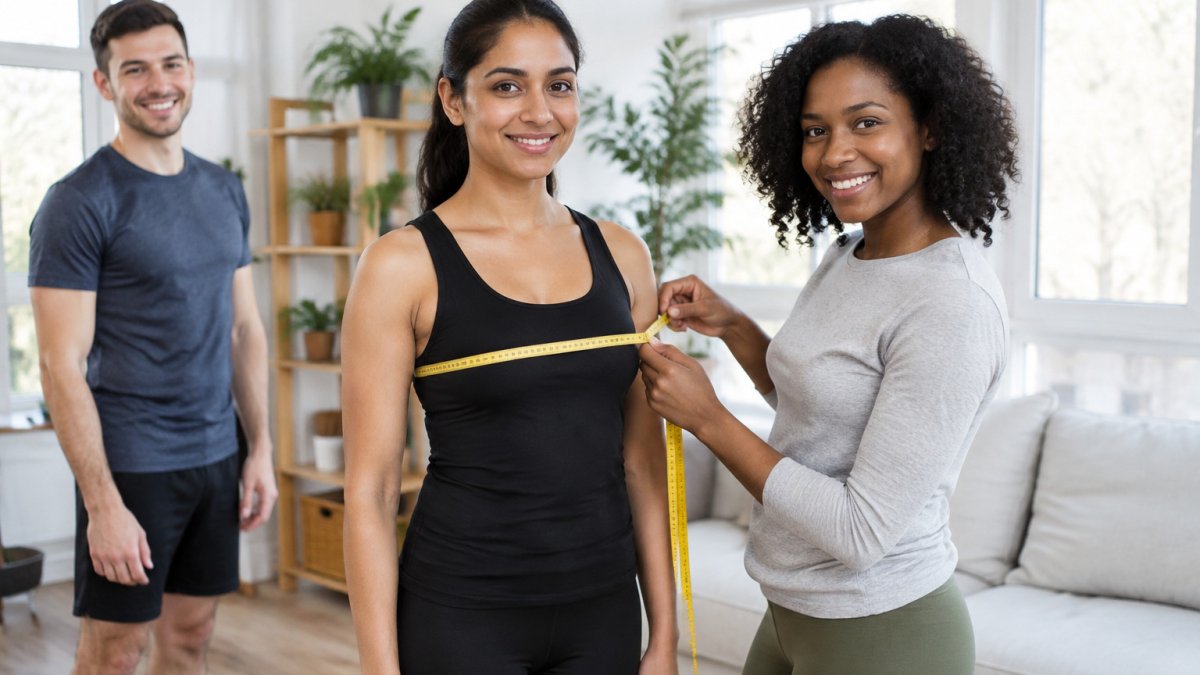
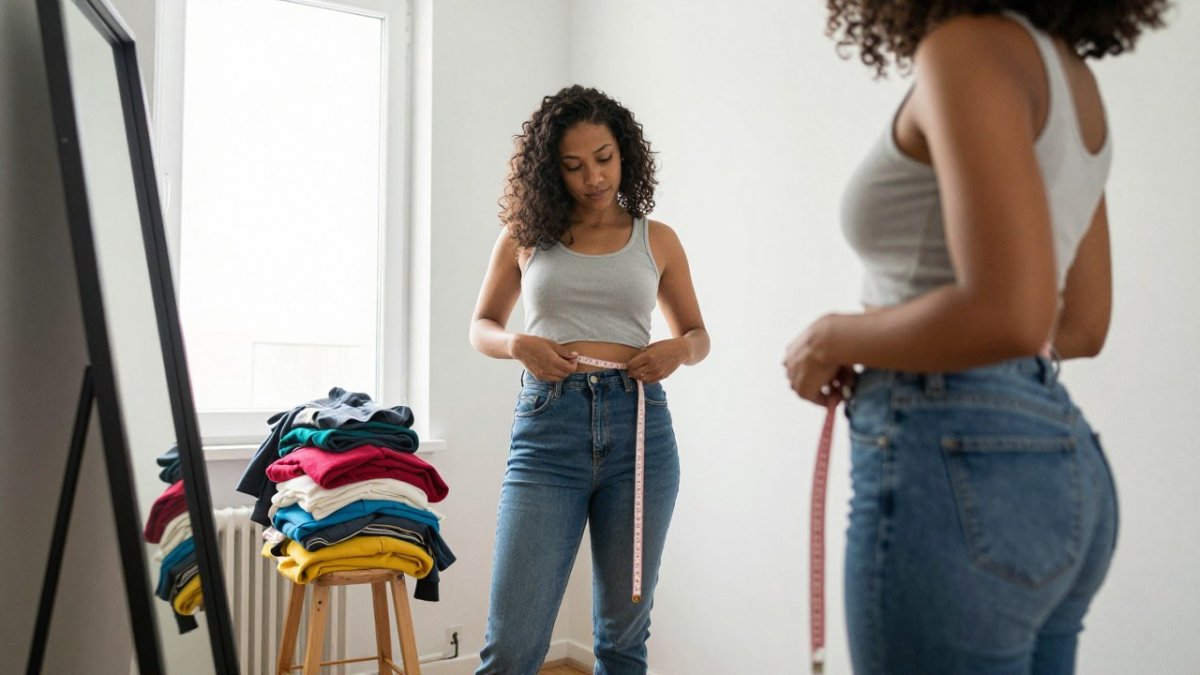
Measuring yourself is the most reliable way to close the gap and get a better online clothes fit. You do not need special tools, just a soft measuring tape and a few minutes.
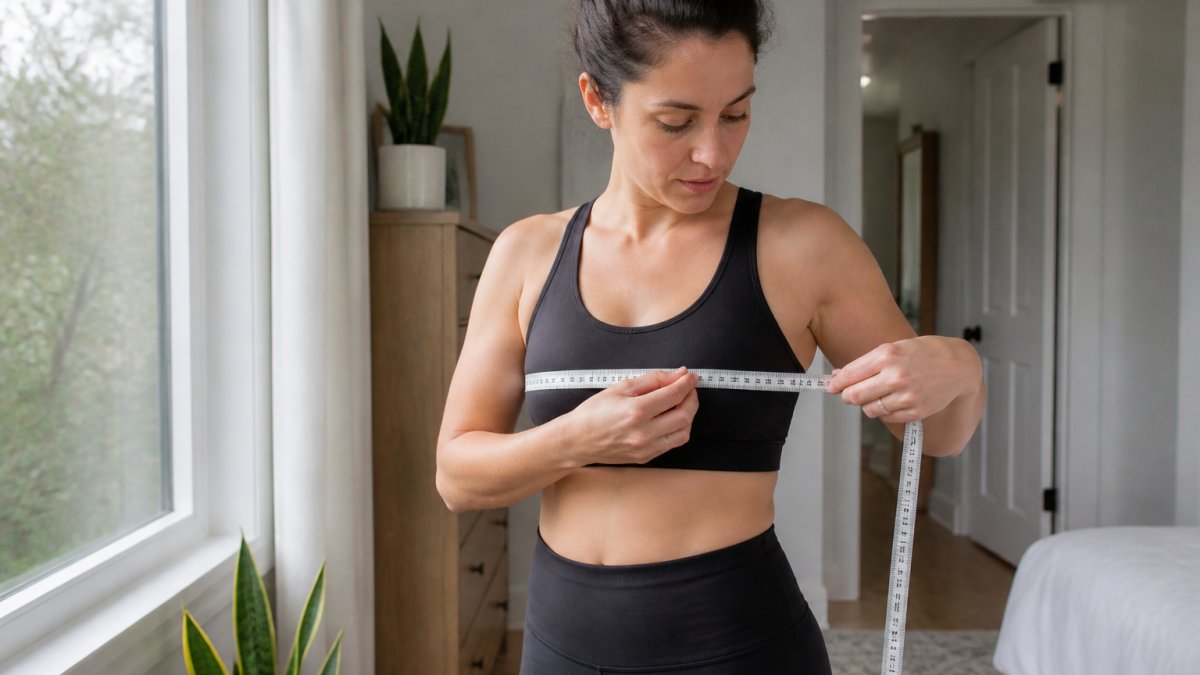
Follow these steps:
- Measure your bust or chest at its fullest point, keeping the tape level
- Measure your waist at the natural narrowest point
- Measure your hips at the fullest part of your seat
- Measure your inseam from the crotch to the ankle bone
- Write each number down before you compare it to any size chart
Stand relaxed and breathe normally while measuring. Pulling the tape tight will give you a smaller number than your true measurement.
How to Use a Size Chart and Clothing Size Calculator Effectively
A size chart only works if you compare the right numbers. Most shoppers read the size letter and stop there, which is why the same "M" keeps failing across brands.
Start by locating the garment-measurement section of the chart, not just the body-measurement section. Many brands publish both, and they answer different questions.
Compare these three things in order:
- Your body numbers against the garment's flat measurements. Match your chest, waist, and hip measurements to the corresponding garment measurements, then calculate the difference. That difference is the ease.
- The ease against the garment's intended fit. A fitted blouse might list 2-3 cm of ease at the chest, while an oversized shirt might list 10 cm or more. If the chart does not state intended fit, use the product photos and description to infer it.
- The fabric type against the ease. Stretch knits can tolerate negative ease (garment smaller than your body) because they expand. Stiff wovens need positive ease or they will pull at the seams.
A clothing size calculator automates the arithmetic, but it is only as good as the inputs. For a full walkthrough of getting accurate results, see how to get your perfect fit with a clothing size calculator.
If the listing has no garment measurements at all, that is a signal to check the return policy before ordering, or to look for a brand that publishes them. A chart without garment numbers is only half a chart.
The article's size chart guidance comes down to a few comparisons worth checking side by side.
| Step | What to compare | Note |
|---|---|---|
| 1 | Your body measurements against garment measurements | Difference is the ease |
| 2 | Ease against intended fit | Fitted vs oversized cuts |
| 3 | Fabric type against ease | Stretch knits tolerate negative ease |
| 4 | Fit between two sizes | Size up woven, size down stretch |
How Clothes Should Fit: Checking Fit Points on Any Garment
Knowing how clothes should fit helps you spot a bad match before it arrives. Each garment has key fit points you can check.
For tops, look at the shoulder seam, chest room, and sleeve length. The shoulder seam should sit at the edge of your shoulder, not slide down your arm. For bottoms, check the waist, seat, and inseam. The seat should be snug without pulling across the back.
Ask yourself these questions before you buy:
- Does the shoulder seam sit where my shoulder ends?
- Is there room to move without the fabric pulling?
- Does the length match where I want it to hit?
How Fabric, Stretch and Model Photos Change What You Receive
Fabric changes fit more than most shoppers expect. A stretch jersey can look fitted on the model and loose on you if the fabric relaxes over time. A stiff woven piece will hold its shape and may feel tighter than the photo suggests.
Model photos add another layer of distortion. Models are often chosen for their proportions, and photographers use lighting and posing to flatter the garment. Read the listed measurements and the model's height and size before trusting the image.
Using Return Policies and Fit Troubleshooting After Delivery
Even careful shoppers get the wrong fit sometimes. The difference between a frustrating return and a quick fix is knowing how to diagnose what went wrong. This is the step most sizing guides skip: a fit troubleshooting method you can run the moment the package arrives.
Diagnose the fit problem before you decide to return
Put the garment on and check these fit points in order. For concrete steps to stop returning items, read how to stop returning clothes. Each symptom points to a different cause and a different fix.
- Tight across the chest or back, with pulling at the buttons or seams. This usually means the garment's ease is too small for your frame, not that you ordered the wrong letter size. Sizing up may fix it, but check whether the shoulders still align.
- Gaping at the bust or armholes. A common sign that the garment was cut for a different bust proportion. Sizing up often makes the shoulders too wide, so this is usually a cut mismatch rather than a size mismatch.
- Shoulder seams sliding down the arm or sitting inside your shoulder. The shoulder width is wrong. This is one of the hardest fit points to alter, so exchange rather than tailor.
- Excess length at the hem or sleeves. Often a proportion issue between your height and the brand's fit model. Hemming is a cheap fix for bottoms; sleeve length is harder on lined or cuffed garments.
- Snug at the waist but loose at the hips, or the reverse. A body-shape mismatch with the brand's fit block. Look for brands that publish separate curvy or tall fits, or choose styles with adjustable waists.
- Fabric feels stiff and unyielding. Check the fiber content. A high-cotton or linen woven will not relax much; a viscose or elastane blend will. If the fabric is the problem, a different size will not solve it.
Read the return policy like a fit document
Before you buy, check three things in the return policy: the window (how many days you have), the condition requirements (tags attached, unworn, original packaging), and whether exchanges are free or only store credit. A generous return window matters most for brands with inconsistent sizing or no garment measurements.
Keep the tags and packaging until you have worn the item for a full day indoors. Fabric relaxes with body heat and movement, and a garment that feels tight in the first five minutes may settle. If it still pulls after an hour, it is the wrong fit.
Reduce avoidable returns
The most effective return-reduction habit is to save your measurements and the garment measurements of pieces that fit well. When you find a brand whose size M matches your numbers, note it. Over time you build a personal fit profile that makes future orders faster and returns rarer. Keeping this record alongside your saved measurements means each order can start from data rather than guesswork.
Choosing Your Next Step Toward a Better Online Fit
Online shopping will never offer the exact feel of a fitting room, but you can close most of the gap. Measure yourself, compare garment numbers instead of size letters, and check fabric and fit notes before you buy.
If you want a faster way to find your size, try Fit Perfect AI. Follow this step-by-step guide to using AI for clothing fit to get started. Upload full-body photos and get sizing recommendations matched to each garment, fabric, and style.
Frequently Asked Questions
Why is clothing sizing so inconsistent?
Clothing sizes are not standardized across brands. Each label sets its own cut, grading and target customer, so a medium at one retailer can measure several centimetres differently from a medium elsewhere. Brands also design for different body proportions and fabrics. Because there is no shared standard, comparing labels alone is unreliable. The more dependable approach is to compare your own body measurements against the garment measurements each brand publishes, rather than trusting the letter or number on the label.
Should I size up or down when buying clothes online?
It depends on the garment and on where you fall within a brand's range. If your measurements sit between two sizes, check the garment's listed measurements for the specific fit points that matter most, such as bust, waist, hip or inseam. Fitted items and stretch-free fabrics leave less room for error, while relaxed styles and stretch materials are more forgiving. If the product page gives no measurements, a brand's return policy is a practical safety net for testing a size before committing to it.
How should clothes fit you?
A well-fitting garment sits smoothly at the shoulders, allows comfortable movement, and does not pull or gape at the fastenings. Sleeves should end around the wrist bone, and trousers should sit at the waist without strain. Ease, the extra room a garment has beyond your body measurement, determines whether an item looks fitted or relaxed. Checking these points against the garment's measurements, rather than the size label, gives the most reliable picture of how the item will fit.
Why do size charts differ between clothing brands?
Each brand builds its size chart from its own customer data, target body shapes and design intent. Some brands grade for a slimmer or fuller build, and some use different fabric assumptions when they draft patterns. Because these choices vary, the same measurement can map to different sizes at different retailers. Checking a brand's own size chart against your measurements before ordering is more reliable than assuming a size you wore elsewhere will match.