 how-to
Clothing Size Calculator: How to Get Your Perfect Fit (2026)
Table of Contents
- What You'll Need Before Using a Clothing Size Calculator
- How to Measure Your Body for Clothes: A Step-by-Step Guide
- Why Clothing Sizes Are Inconsistent Across Brands
- How to Find Your Fit with AI: Beyond the Tape Measure
- How to Use a Clothing Size Calculator for Online Shopping
- Common Sizing Mistakes to Avoid
- Conclusion
- Frequently Asked Questions
Last Updated: September 27, 2026
What You'll Need Before Using a Clothing Size Calculator
A clothing size calculator is a tool that turns your body measurements into the right size for a specific brand, garment, and cut. It works best when you feed it accurate numbers. Get those wrong, and even the smartest tool gives you the wrong answer.
Before you open any calculator, gather four things:
- A flexible tape measure, not a rigid one
- A full-length mirror, or a friend to help
- A fitted top and leggings, or light clothing
- A pen and paper, or a notes app
How to Measure Your Body for Clothes: A Step-by-Step Guide
Stand up straight, keep the tape level, and don't pull it tight. That's the whole method. The rest is knowing where to place the tape for each body part, and how the answer changes depending on what you're buying.
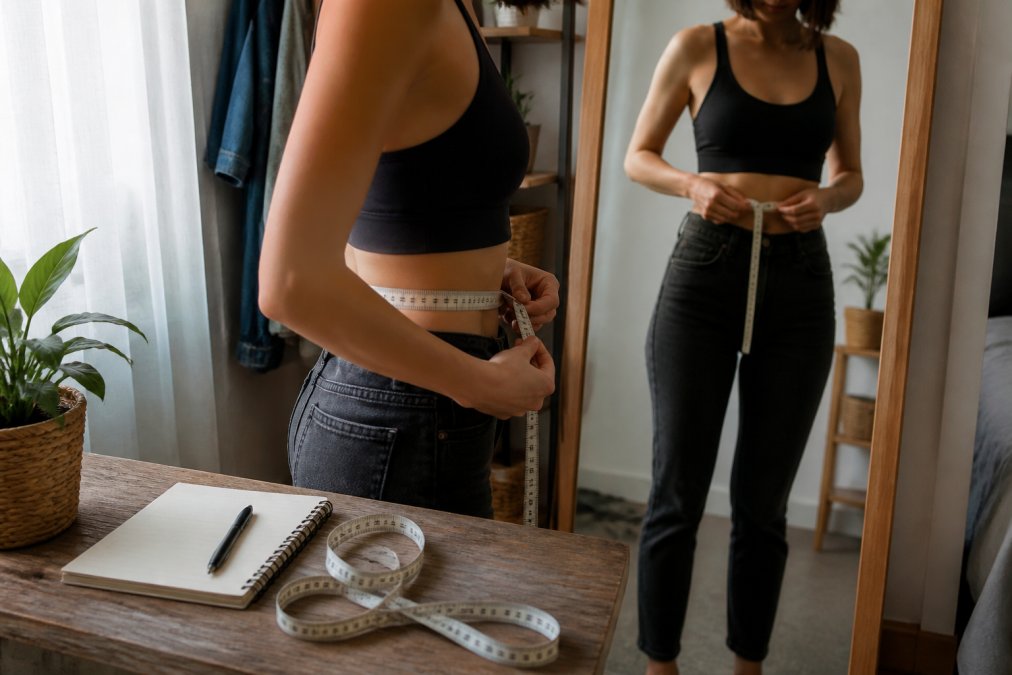
Measuring Your Chest, Waist, and Hips
Here is how to measure body for clothes in three core steps:
- Chest: Wrap the tape around the fullest part of your chest, under your arms. Keep it level all the way around. For women, this is the bust measurement, wear an unpadded bra or a fitted top.
- Waist: Find your natural waist, the narrowest point above your belly button and below your ribcage. Breathe out normally before you read the number. Don't suck in.
- Hips: Measure around the fullest part of your hips and seat, usually 18-23 cm (7-9 in) below your natural waist. Keep your feet together.
Getting Your Inseam and Sleeve Length Right
Inseam and sleeve length decide whether a garment actually fits, not just whether it's your size.
- Inseam: Measure from your crotch seam down to where you want the hem to sit. For trousers, this is usually to the top of your shoe; for shorts, to mid-thigh.
- Sleeve: Measure from the centre back of your neck, over your shoulder, to your wrist bone. For a short-sleeve shirt, stop at mid-bicep.
How Body Shape Changes the Numbers You Need
A tape measure gives you raw numbers, but two people with identical chest, waist, and hip measurements can need different sizes. Body shape is the missing variable.
- Athletic or V-shaped builds: Broad shoulders and chest with a narrower waist often push you up a size in tailored shirts and jackets, even when your waist says otherwise. Measure your shoulder width (seam to seam across the back) and add it to your notes.
- Curvy or hourglass builds: A large hip-to-waist ratio means your hip measurement may put you two sizes above your waist. Buy for the larger measurement and have the waist taken in, or look for brands that cut for a curvier fit block.
- Straight or rectangular builds: Waist and hips are close in measurement. You'll often fit the size your chest suggests, but may need to size down in stretchy fabrics to avoid a boxy look.
- Petite and tall frames: Height affects where a garment's waistline, hem, and sleeve actually land. Petite sizing is generally cut for frames under about 163 cm (5'4"), tall sizing for frames over about 173 cm (5'8").
Garment-Specific Measurement Notes
Different garments use different reference points on the same body:
- Tops and dresses: Chest/bust and shoulder width matter most. Waist and hip matter for fit-and-flare or bodycon cuts.
- Trousers and jeans: Waist, hip, and inseam. Rise (low, mid, high) changes where the waistband sits, so check the brand's rise measurement too.
- Suits and blazers: Shoulder width and chest. A jacket that fits the shoulders can be tailored at the waist; one that doesn't fit the shoulders usually can't be fixed.
- Bras: Band size comes from your underbust measurement, cup size from the difference between underbust and bust. This is separate from clothing sizing and worth measuring on its own.
Why Clothing Sizes Are Inconsistent Across Brands
A size 12 in one store can be a size 14 in another. This isn't a glitch. It's how the industry works. Every brand builds its own size logic, its own fit guide, and its own size range.
Three things drive the gap:
- Different fit blocks: Brands design for different body shapes, so a "medium" means different things.
- Vanity sizing: Labels get smaller over time to flatter shoppers.
- International sizing standards: US, UK, and EU systems don't line up.
Vanity Sizing and the Illusion of a Standard Size
Vanity sizing is the practice of labelling a larger garment with a smaller number. A size that was once a 14 may now be sold as a 10.
| Sizing System | Based On | Main Weakness |
|---|---|---|
| US | Numeric sizes (0, 2, 4...) | Vanity sizing shifts numbers over time |
| UK | Numeric sizes, offset from US | Varies by brand and category |
| EU | Body measurements in cm | Doesn't map cleanly to US or UK |
| Brand-specific | Each brand's own fit block | No cross-brand consistency |
How to Find Your Fit with AI: Beyond the Tape Measure
Tape measures give you raw numbers. They don't tell you how a specific fabric will drape or how a cut will sit on your frame. That's the gap AI sizing tools fill.
How to Use a Clothing Size Calculator for Online Shopping
Start with your measurements, then let the calculator do the matching. The steps below work for almost any size estimator, but the real skill is knowing what to do when the calculator's answer and the brand's size chart disagree.
- Enter your chest, waist, hip, and inseam numbers.
- Select the brand and garment type.
- Choose your fit preference: slim, regular, or relaxed.
- Read the size recommendation.
- Cross-check it against the brand's own size chart.
Why a Universal Calculator Is Only Half the Answer
Here's the gap most size calculators don't tell you about: vanity sizing makes a single universal answer unreliable across brands. A size 10 at one retailer can measure like a size 12 at another, and the same brand may even shift its fit block between seasons.
- Build a brand baseline. The first time you buy from a retailer, order your calculator size and note how it fits. If it runs small, you now know to size up there in future.
- Check the brand's own size chart against your numbers. If your waist is 74 cm and the brand's size 10 lists a 72 cm waist, you're between sizes, decide based on fabric.
- Read the fit notes, not just the chart. Terms like "runs small," "true to size," and "relaxed fit" are the brand telling you how its block deviates from the standard.
- Look at the model's stats. Most online retailers list the model's height and the size they're wearing. That's a free real-world calibration point.
The Returns and Sustainability Angle
Getting your size right the first time isn't just about avoiding hassle. Online apparel returns are a significant source of waste, returned items often can't be resold and end up discounted, liquidated, or discarded, and the extra shipping adds emissions.
- Keep a note of your measurements and your size at each brand you shop with.
- Re-measure once a year, or after any significant weight change.
- For high-stakes purchases, a wedding outfit, an interview suit, measure fresh rather than relying on memory.
- Check the return window before you buy. The Federal Trade Commission guidance on online shopping returns is a useful reminder that policies vary widely.
Common Sizing Mistakes to Avoid
The biggest sizing mistakes are small and easy to fix. Most come down to measurement accuracy and rushing the process.
Watch for these:
- Measuring over thick clothing
- Holding the tape too tight or too loose
- Measuring the wrong waist point
- Ignoring the brand's specific size chart
- Assuming your size is the same everywhere
Conclusion
Getting your size right shouldn't feel like a gamble. Measure carefully, understand why brands differ, and use a tool that reads your actual body shape.
Frequently Asked Questions
How do I figure out my clothing size?
Start by taking your body measurements with a flexible tape measure. Measure your chest at the fullest point, your natural waist (the narrowest part of your torso), and your hips at the widest point. Then use a clothing size calculator or the brand's size chart to convert those numbers into a size. For online shopping, always check the specific brand's size guide because sizes vary. If you're between sizes, consider the fabric and fit preference. A clothing size calculator can automate this process and give you a personalized recommendation.
Why do clothing sizes vary so much between different brands?
Clothing sizes are inconsistent because there is no universal sizing standard that all brands follow. Each brand creates its own size charts based on its target customer and fit philosophy. Additionally, vanity sizing, where brands label larger garments with smaller numbers to flatter customers, has skewed traditional sizing. International size conversion charts also differ, so a US medium may not equal a UK medium. This is why using a clothing size calculator that accounts for brand-specific sizing can help you find the right fit and reduce returns.
How accurate is a clothing size calculator?
The accuracy of a clothing size calculator depends on the quality of your measurements and the calculator's algorithm. If you measure correctly and input accurate numbers, a good calculator can be very precise. However, some calculators only use basic measurements and don't account for body shape or brand differences. Tools like FitScan AI use full-body photos and AI to provide tailored recommendations for each garment, fabric, and style, which can be more accurate than generic calculators. Always cross-check with the brand's size chart for best results.
Can I use a clothing size calculator for different body types?
Yes, many clothing size calculators are designed to accommodate various body types. They typically ask for multiple measurements like chest, waist, hips, and sometimes inseam and sleeve length, which helps create a more complete size profile. Some advanced tools, such as FitScan AI, use AI to analyze your body shape from photos and recommend sizes that flatter your unique proportions. If you have a curvier figure or are between sizes, look for a calculator that considers body shape and fit preference, not just height and weight.