 how-to
How to Find Your Perfect Clothing Size Every Time
Last Updated: November 10, 2026
Quick Summary
To find your perfect clothing size, measure your bust, waist, hip, and inseam with a soft tape measure against bare skin, keeping the tape level and snug. Record each number in both inches and centimetres, then compare your largest relevant measurement to that brand's own size chart for the specific garment category rather than trusting the size label.
- Measure bust, waist, hip, and inseam every six months and keep the numbers in your phone.
- Hip measurement wraps around the fullest part of your hips, roughly 20 cm below your waist.
- When between sizes, size up for structured fabrics and size down for stretch fabrics.
- Denim should be sized to your hip, not your waist, since denim relaxes about half a size.
- There is no universal standard sizing system, so check each brand's own size chart before ordering.
Table of Contents
- Start With a Soft Tape Measure and Bare Skin
- How to Measure Yourself for Clothes: The Four Numbers That Matter
- How to Read a Clothing Size Chart Without Guessing
- Why a Clothing Size Calculator Beats Comparing Labels
- What to Do When Between Clothing Sizes
- Why Clothing Sizes Vary Between Brands
- Get Your Sizing Right Before Your Next Order
- Frequently Asked Questions
Start With a Soft Tape Measure and Bare Skin
Most clothing size problems start before you ever open a size chart. They start with the tools and the setup. Get those right and the rest of the process gets much easier.
Here is what you need:
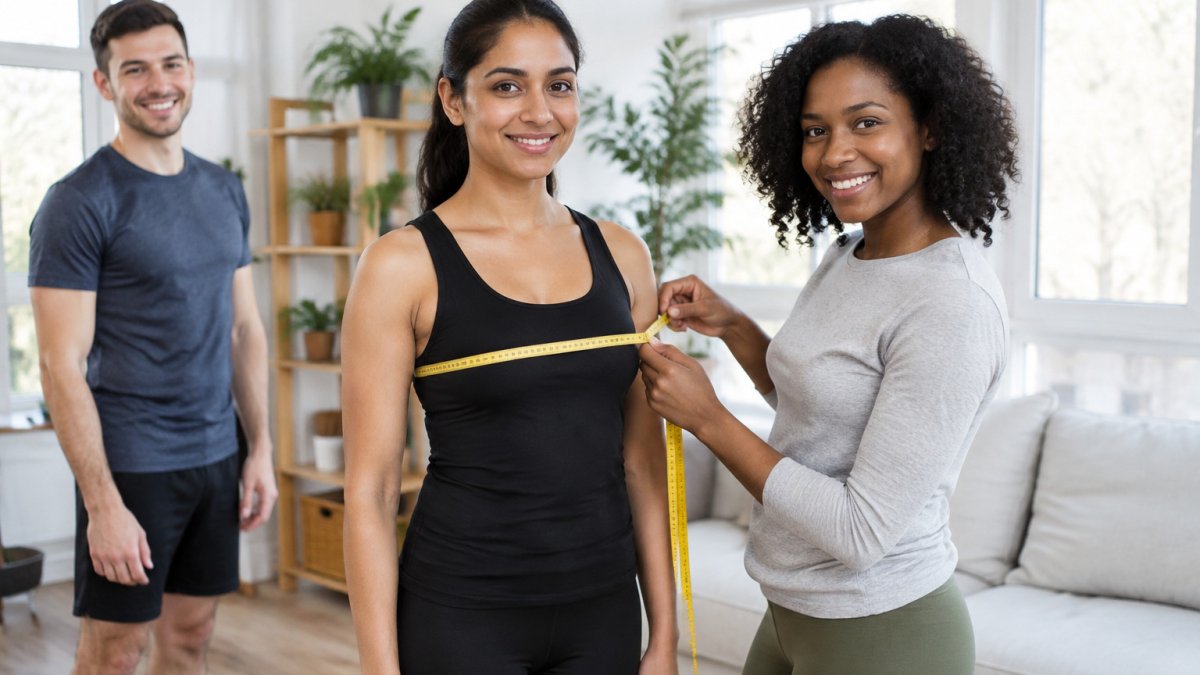
- A soft tape measure, the flexible kind used for sewing. A metal builder's tape will not follow your curves.
- Bare skin or thin undergarments. Bulky clothes add phantom inches.
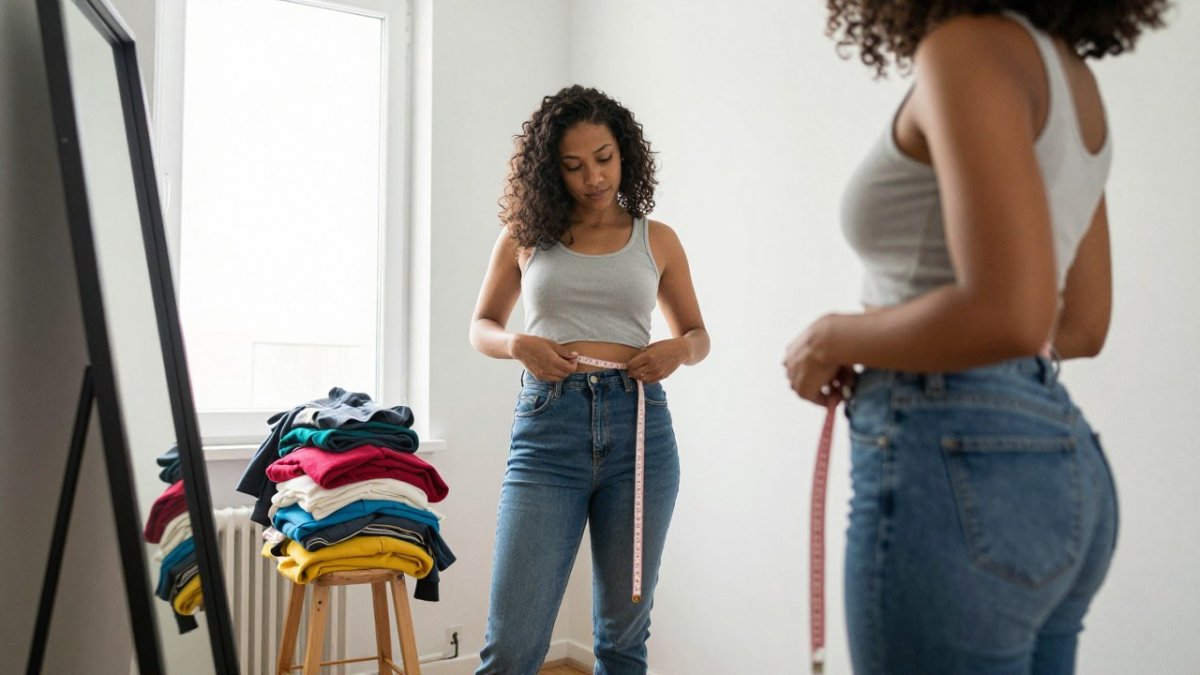
- A full-length mirror so the tape stays level.
- A notepad or phone to record numbers as you go.
Stand tall and relax. Do not suck in your stomach or pull the tape tight. A soft tape should sit snug against your body without pressing into it.
Measurement accuracy comes down to two habits: keep the tape parallel to the floor, and check each number twice. A tape that slips a centimetre changes your whole size.
Good input data produces good recommendations. Sloppy measurements produce sloppy results, no matter how smart the software is.
How to Measure Yourself for Clothes: The Four Numbers That Matter
Four body measurements cover almost every garment you will buy: bust, waist, hip, and inseam. Learn these once and you can size yourself for dresses, trousers, jackets, and jeans.
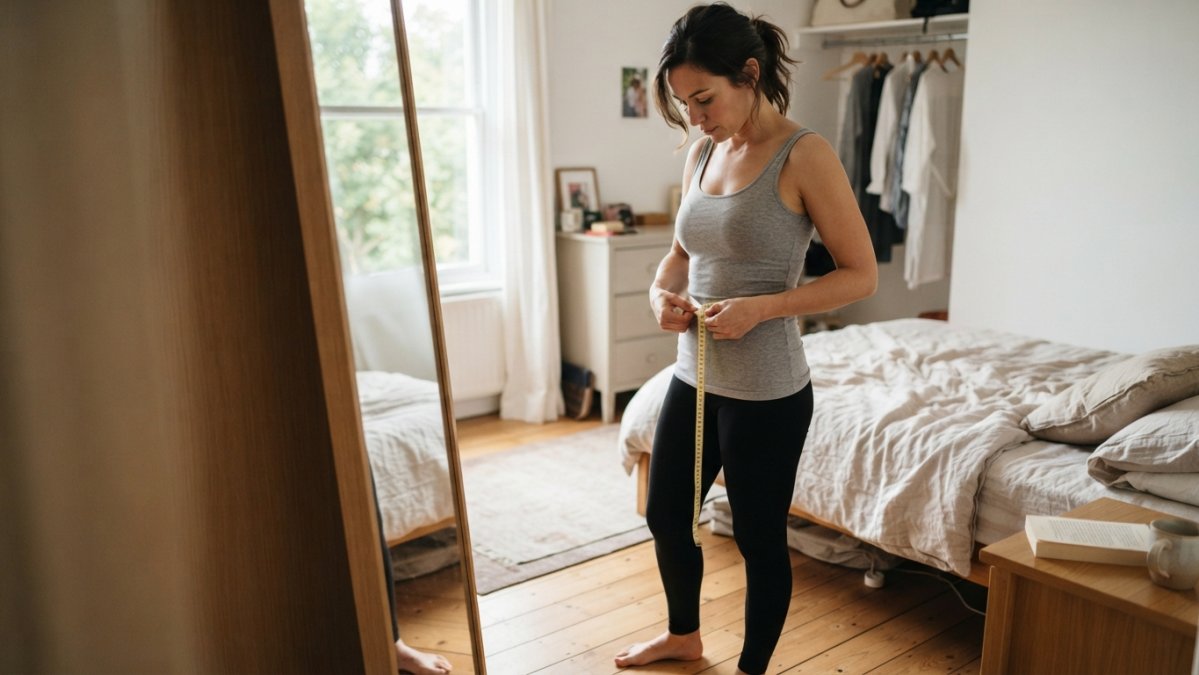
Bust, Waist, and Hip Measurement
Bust circumference is measured around the fullest part of your chest, tape level across your back. Keep your arms down and breathe normally.
Waist measurement goes around the narrowest part of your torso, usually just above the belly button. Bend sideways and the crease that forms marks your natural waist.
Hip measurement wraps around the fullest part of your hips and seat, roughly 20 cm below your waist. Keep your feet together.
Write each number down in both inches and centimetres. Many size charts use one or the other, and measurement units get lost in conversion.
Inseam Length and Garment Measurements
Inseam length runs from the crotch seam to the hem of your trousers. The easiest method is to measure a pair that already fits you well, laid flat.
Garment measurements are different from body measurements. Brands list the actual flat width of a garment, and doubling that number gives the circumference. Compare this to your body numbers, not to a size label.
A University of Minnesota study on apparel sizing describes sizing as a complex problem shaped by how data is collected and analysed. That complexity is exactly why your own numbers beat any label.
How to Read a Clothing Size Chart Without Guessing
A size chart lists body measurements against each size, but the chart only works if you match the right measurement to the right garment. Read the column headers first, not the size letters.
Follow these steps:
- Find the chart for that specific garment category, because a brand's dress chart differs from its jeans chart.
- Match your largest relevant measurement to the chart, not the smallest.
- Check whether the chart uses body or garment measurements.
- Note the fit preference the chart assumes, such as slim or relaxed.
- Read the size guide notes below the table for stretch and shrinkage.
A common mistake is sizing down because a number sits between two rows. When in doubt, size to the larger measurement and let tailoring handle the rest.
Why a Clothing Size Calculator Beats Comparing Labels
A clothing size calculator converts your measurements into a recommended size for a specific brand, which removes the guesswork of comparing labels across shops.
A size label alone may not reliably identify the right fit. Labels describe a brand's own fit model, not your body.
SizeCharter-style tools let you enter measurements or a size you wear in a favourite brand, then translate that into sizes elsewhere, according to SizeCharter's size conversion tool. The principle is sound: start from data, not from a letter.
You can try the approach yourself with our clothing size calculator and see how your measurements map to real garment sizes.
What to Do When Between Clothing Sizes
When your measurements land between two rows on a size chart, the safe default is to size up for structured fabrics and size down for stretch fabrics. But that single rule only holds if you also account for the garment's cut, its construction, and how you intend to wear it. The fuller decision tree looks like this.
Structured garments: size up. Tailored jackets, coats, blazers, and lined dresses have seam allowances that a tailor can take in but rarely let out.
Stretch garments: size down, with a caveat. Jersey, rib knit, ponte, and elastane-blend tops and dresses relax with wear. Sizing down keeps the garment from bagging at the elbows and knees by mid-day. The caveat: check the fibre content.
Denim: size to your hip, not your waist. Most jeans are cut to sit on the hip, and denim relaxes roughly half a size after a few wears.
Silk, satin, and bias-cut: size up. These fabrics show every pull line and do not forgive a tight fit. A bias-cut slip dress that is slightly loose drapes; one that is slightly tight ripples across the hip.
Outerwear and swimwear: size up. You will layer under a coat, and swimwear elastic does not stretch the way knitwear does. A too-small swimsuit is a return; a slightly large one can be adjusted at the strap.
Shoes and footwear: not a body-measurement problem, but the same logic applies, size to your larger foot and the thicker sock you will actually wear.
Watch out: the size-up rule fails for unlined, unstructured garments with no seam allowance to work with, such as a simple slip dress or a boxy linen shirt.
A fit check with a tailor costs far less than a return, and small alterations to a slightly larger garment usually beat squeezing into a smaller one.
When your measurements fall between two rows, the right move depends on the fabric and the garment.
| Garment or fabric | What to do | Why |
|---|---|---|
| Structured garments (jackets, coats, blazers) | Size up | Seam allowances can be taken in but rarely let out |
| Stretch garments (jersey, rib knit, ponte) | Size down, check fibre content | Knits relax with wear; viscose blends may stretch permanently |
| Denim | Size to your hip, not your waist | Denim relaxes roughly half a size after a few wears |
| Silk, satin, bias-cut | Size up | These fabrics show every pull line and do not forgive a tight fit |
| Outerwear and swimwear | Size up | You layer under a coat; swimwear elastic does not stretch like knitwear |
| Shoes and footwear | Size to your larger foot | Match the thicker sock you will actually wear |
| Unlined, unstructured garments | Match body to flat garment measurement | No seam allowance to work with |
Why Clothing Sizes Vary Between Brands
There is no universal standard sizing system, and that is not an accident. Each brand builds its own size range around its own fit model, a set of body measurements the brand uses as its design reference.
Vanity sizing is the quiet culprit. Brands gradually shrink the measurements attached to a size label so shoppers feel better about the number they wear. A size 12 today can measure what a size 14 did a generation ago.
International sizing adds a second layer of drift. A UK 12, a US 8, and an EU 40 are roughly comparable, but the conversions are not exact, and the gaps widen at the larger end of the range. The reason is that each region built its system from a different base population and a different set of body measurements.
Fit models differ by category, not just by brand. A brand's dress fit model may be a different body from its jeans fit model. That is why a medium dress and a medium pair of jeans from the same label can fit differently. Always check the chart for the specific garment category.
What you can do about it. Build a personal measurement card, bust, waist, hip, inseam, and shoulder, and keep it in your phone. Before ordering from a new brand, compare your card to that brand's chart rather than to the size you wear elsewhere. Record which brands run small or large in a saved note.
For side-by-side comparisons, our clothing sizing comparison guide lays out brand charts and conversions in one place. If inconsistent sizing keeps costing you returns, this how-to on solving brand sizing issues walks through the fix step by step.
Get Your Sizing Right Before Your Next Order
The whole process takes about ten minutes and saves you hours of returns. Measure once, record the numbers, and keep them handy.
Then build a simple habit:
- Measure bust, waist, hip, and inseam every six months
- Record numbers in both inches and centimetres
- Check each brand's own size chart before ordering
- Compare garment measurements for anything expensive
- Note which brands run small or large in a saved list
Digital fitting tools now go further than charts. A 2025 study evaluated machine learning models that predict clothing size from 3D body data, according to research on machine learning for clothing size prediction. That is the direction the industry is heading.
Fit Perfect AI works on the same idea. You upload full-body photos, and FitScan AI returns precise size recommendations for every garment, fabric, and style.
If returns have been eating your time and budget, our fit guide on stopping clothing returns covers the practical steps. When you are ready to skip the tape measure entirely, subscribe to Fit Perfect AI and let your photos do the sizing.
Sizing should not be a gamble every time you shop online. Fit Perfect AI removes the guesswork with photo-based analysis, garment-specific recommendations, and support for every fabric and style. Get started with Fit Perfect AI and order your next piece with confidence.
Frequently Asked Questions
What measurements do I need to find my clothing size?
You need four core numbers: bust circumference, waist measurement, hip measurement, and inseam length. Take them against bare skin or light undergarments with a soft tape measure held level and snug, not tight. Write each number down in both inches and centimeters, since size charts switch between measurement units. With those four figures you can match almost any brand's size guide and reduce clothing returns from sizing discrepancy.
Should I size up or down when I am between clothing sizes?
It depends on the garment category and fit preference. For form-fitting pieces with no stretch, size up and plan for tailoring. For relaxed silhouettes or fabrics with give, size down. Check the size guide for a stated fit model and read reviews mentioning fit. A clothing size calculator that accounts for fabric and style removes most of the guesswork, because it weighs the garment's cut rather than the label alone.
Why do clothing sizes vary so much between brands?
Each brand builds its size range around its own fit model and target customer, and standard sizing has never been truly standard. Apparel sizing is a complex problem, and shoppers often find the same frustration across brands. Vanity sizing adds to it: a medium at one retailer can match a large at another, so always check that brand's own size chart before ordering.
How do I choose the right size when shopping online?
Measure yourself once, then use each retailer's size chart plus any size guide notes on fabric stretch and fit. Where a digital fitting tool is offered, use it: FitScan AI takes full-body photo uploads and returns precise sizing recommendations for each garment, fabric, and style, which helps when brand consistency is poor.