 comparison
Clothing Sizing Comparison: Brands, Charts, and Conversions
Quick Summary
A sizing comparison sets clothing labels from different brands, regions and garment types side by side to estimate which size will fit. Start from your own body measurements, since there is no single standard for apparel or footwear sizing.
- Measure bust or chest, waist, hip, inseam and foot length, and record them in one unit.
- Compare body measurements against each brand's own chart, not a generic conversion.
- Check whether a chart lists body or garment measurements, because garment charts include ease.
- Vanity sizing means identical measurements can carry different labels, so compare measurements instead.
- Between sizes, decide by fabric stretch, garment ease and your preferred fit.
Table of Contents
- What a Sizing Comparison Covers and What It Cannot Tell You
- How to Measure Clothing Size Before You Compare Anything
- Clothing Size Conversion Chart: US, UK and EU Equivalents
- Brand Size Chart Comparison: Why the Same Label Fits Differently
- Vanity Sizing, Fit Preference and Garment Ease
- Using a Clothing Size Calculator and Its Limits
- Choosing a Size Confidently Before Your Next Order
- Frequently Asked Questions
What a Sizing Comparison Covers and What It Cannot Tell You
Last Updated: November 1, 2026
A sizing comparison puts clothing labels from different brands, regions and garment types side by side so shoppers can estimate which size is likely to fit.
Online apparel buyers face a real problem here. Baymard Institute reports that 83% of apparel sites do not provide sufficient sizing information, which leaves shoppers guessing Baymard Institute apparel sizing research.
A comparison is not a guarantee.
Market growth explains why the topic keeps growing. Future Market Insights estimates the plus-size clothing market at USD 339.6 billion in 2026 and projects a 6.2% CAGR from 2026 to 2036 Future Market Insights plus-size clothing market report.
This guide covers how to measure yourself, how to read conversion charts across US, UK and EU systems, why brand charts disagree, and how to choose a size with confidence.
How to Measure Clothing Size Before You Compare Anything
Measure yourself before you open any size chart. A comparison is only as good as the numbers you bring to it.
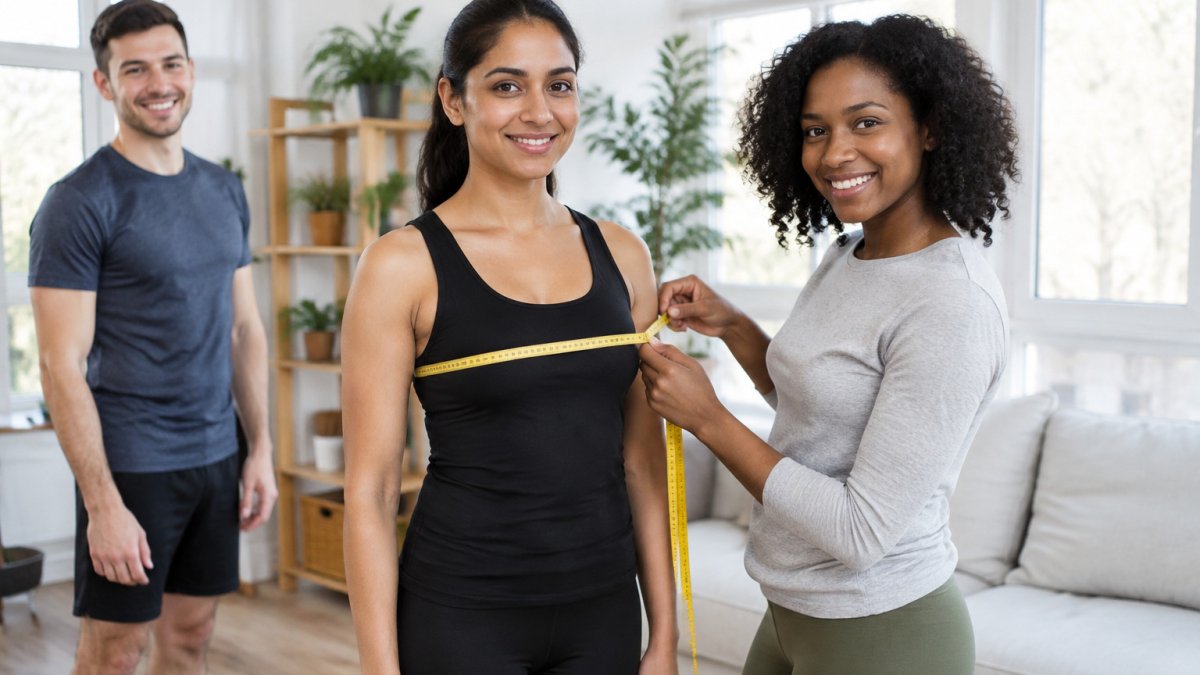
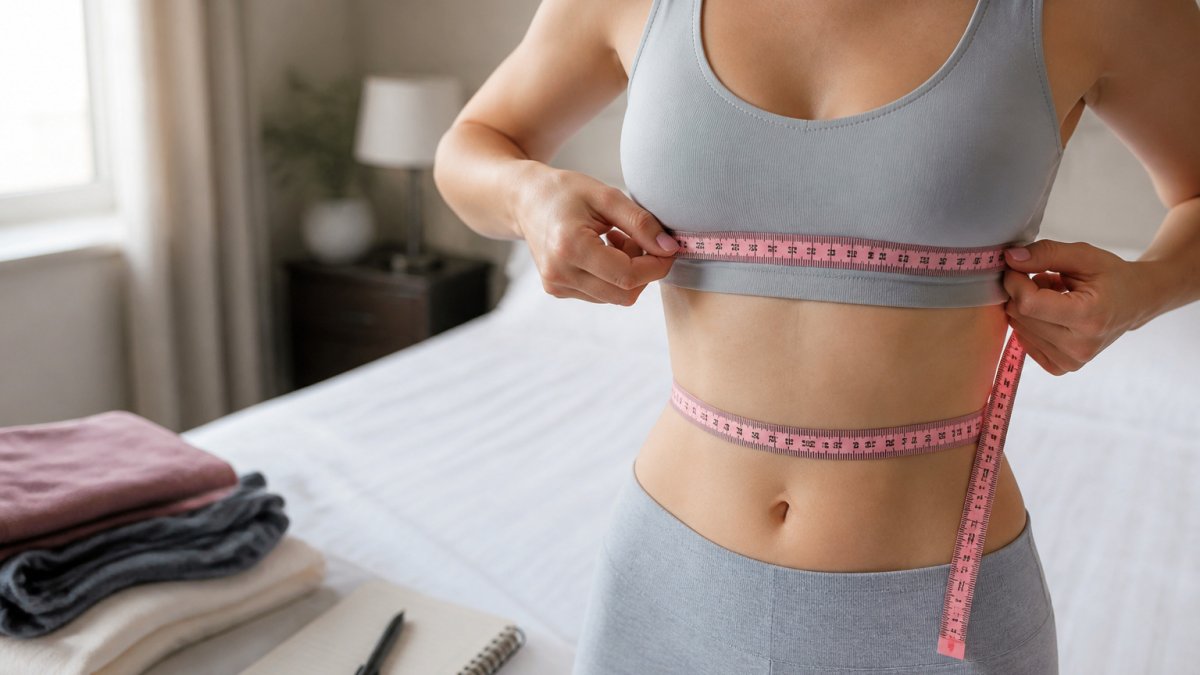
The core measurements are bust or chest, waist and hip. For trousers, add inseam. For footwear, measure foot length while standing. Take each measurement twice and average the results, because small errors compound when you convert between regional systems.
Step-by-step: the five measurements that drive most size charts
- Bust or chest. Wrap the tape around the fullest part of the bust or chest, level with the floor, arms relaxed at your sides. Keep one finger under the tape so it is not compressed against the body.
- Waist. Find your natural waist, the narrowest point, usually just above the navel, and measure without holding your breath or sucking in.
- Hip. Measure around the fullest part of the seat, typically 18-23 cm (7-9 in) below the natural waist, feet together.
- Inseam. Stand against a wall and measure from the crotch seam point down to the floor, or measure a pair of trousers that fit you well from crotch seam to hem.
- Foot length. Stand on a sheet of paper, mark the heel and the longest toe, and measure the distance. Do this late in the day, when feet are at their largest.
A common pattern is that shoppers measure over bulky clothing or pull the tape tight; both push the number down and lead to ordering a size too small. For a fuller walkthrough of getting accurate sizing for your body shape, see Accurate Sizing for Curvy Figures: A Complete Guide. Measure against light clothing or skin, and have someone help with the bust and hip if you can.
Body measurements versus garment measurements
Compare your numbers to the brand's own chart, not a generic one. Many brands list body measurements for each size, while others list garment measurements, which describe the finished clothing.
A quick test: if the chart's waist number for a size is larger than your body waist by more than a few centimetres, it is almost certainly a garment measurement.
What to do when you fall between sizes
Measurements rarely land exactly on a chart row. When you are between two sizes, decide by three factors:
- Fabric stretch. Knit fabrics with elastane recover and forgive a half-size gap; woven fabrics with no stretch do not.
- Garment ease. A relaxed or oversized cut gives you room to size down; a slim or tailored cut gives you little.
- Fit preference. A close fit argues for the smaller size, a roomy fit for the larger, but only within the limits set by the fabric and cut.
If the brand publishes garment measurements for the specific item, compare those against a garment you already own and like. That single check resolves more between-size decisions than any conversion chart.
Clothing Size Conversion Chart: US, UK and EU Equivalents
Clothing size conversion is the process of translating a size label from one regional system into another.
A useful rule: convert the measurement, not the label. Match your bust, waist and hip to the brand's body-measurement column, then find the size that fits all three.
Shoppers who buy internationally should also check the returns policy for the destination market, since a size that works on a conversion chart may still need an exchange.
Women's and Men's Sizes Side by Side
Women's and men's sizing use different cuts and proportions, so a conversion that works for one may not work for the other. Women's charts typically weight hip measurement more heavily, while men's charts usually emphasise chest and waist.
Do not assume a unisex label removes the difference. Unisex garments often follow one set of proportions, so confirm the measurements before you order.
Shoe Size Conversion Across Regions
Footwear conversion is more precise than apparel because it is tied to foot length. Measure your foot in centimetres while standing, then match that length to the brand's chart. Footwear sizing still varies by brand and by last shape, so a half size up or down is sometimes necessary, especially for wide or narrow feet.
Brand Size Chart Comparison: Why the Same Label Fits Differently
Brand charts differ because each company defines its size range, fit block and ease independently. There is no single U.S. standard for apparel or footwear sizing, as the American Apparel & Footwear Association notes AAFA statement on apparel and footwear sizing, so a "large" from one retailer can be several centimetres bigger at the waist than a "large" from another.
The mechanism: three variables that move the same label
When two brands both sell a "medium," the difference usually comes from three places:
- The base body the pattern is drafted for. A brand targeting a younger, slimmer customer may draft its medium around a smaller bust and waist than a brand targeting a broader demographic.
- The grade rule. Brands scale sizes up and down by fixed increments (the "grade"). One brand may add 5 cm to the bust per size; another may add 4 cm. Over several sizes, those small increments compound into a full size of difference.
- Ease and fit block. A "relaxed" medium and a "slim" medium can share a body chart but finish several centimetres apart at the chest and waist.
Vanity sizing sits on top of all three. A common pattern is that a brand relabels its old large as a medium to let shoppers buy a smaller number, which means the same body measurements can map to different labels across retailers, and the only reliable fix is to compare measurements, not labels.
How to compare two brands before you buy
Rather than converting labels, run a short comparison routine:
- Pull both brands' body-measurement charts for the size you think you are, and compare the bust, waist and hip numbers directly. If one brand's medium waist is 4 cm larger, that is your real signal.
- Check whether either brand publishes garment measurements for the specific item. Garment numbers beat body numbers because they include ease.
- Read the fit notes, "relaxed," "slim," "true to size", and treat them as a second data point, not the primary one.
Shopify merchants increasingly add size-chart apps to address this. Tools such as Kiwi Size Chart & Recommender, MP Size Chart & Size Guide and Genlook's AI size chart are examples of apps that display brand-specific charts and recommendations on product pages Genlook guide to Shopify size chart apps. Their value depends on how accurately each merchant enters its measurements, an app fed a generic chart will reproduce the same mismatch it was meant to solve.
The table below summarises how the three main variables move the same size label from one brand to another.
| Variable | What it changes | How to check |
|---|---|---|
| Base body | Bust, waist and hip a pattern is drafted for | Compare body-measurement charts directly |
| Grade rule | Size increments, often 4 cm vs 5 cm per size | Compare the gap between adjacent sizes |
| Ease and fit block | Relaxed vs slim finish at chest and waist | Read fit notes and garment measurements |
| Vanity sizing | Smaller label for the same measurements | Compare measurements, not labels |
Vanity Sizing, Fit Preference and Garment Ease
Vanity sizing means labelling a garment with a smaller size than its actual measurements would suggest.
Fit preference is the other variable. Some shoppers want a close fit, others want room to move.
Garment ease is the built-in room between your body and the finished piece. A fitted shirt might add only a few centimetres, while an oversized jacket can add much more.
Using a Clothing Size Calculator and Its Limits
A clothing size calculator estimates your size from measurements or inputs you provide. It is a convenient starting point, especially when you shop across several brands.
Calculators work best for standard body shapes and well-documented brands. They are less reliable for unusual proportions, new brands with little sizing data, and garments where fit depends heavily on cut.
Fit Perfect AI's FitScan AI works from full-body photo uploads to produce sizing recommendations for each garment, fabric and style.
Choosing a Size Confidently Before Your Next Order
Start with your measurements, then open the brand's own chart. Confirm whether it lists body or garment measurements and match accordingly.
Keep a record of the sizes that fit you well from each brand. Over time, that personal reference is more useful than any generic conversion chart.
Ready to stop guessing? Register with Fit Perfect AI to get sizing recommendations based on your own photos.
Frequently Asked Questions
How do I compare clothing sizes between brands?
Start with the brand's own size chart rather than the label, since there is no single U.S. standard for apparel sizing according to the American Apparel & Footwear Association. Match your body measurements (bust, waist, hip) to the chart's measurement ranges, not to the letter or number. Then check the garment's listed measurements, such as chest width or length, against a garment you already own that fits well. Where a brand publishes a measurement range instead of a size, treat the range as the deciding factor. Cross-brand comparisons are approximate, so compare at least two charts when you are between sizes.
How do I convert clothing sizes between the US and UK?
Use a conversion chart as a starting point, then confirm with body measurements. Clothing size conversions are approximate because brands cut to their own patterns. A US size label often differs from the UK label for the same body measurements, so do not assume a one-to-one swap. Measure your bust, waist and hip, find the matching range in the destination brand's chart, and use the result to choose a size. If your measurements fall between two sizes, compare the garment's listed measurements to a well-fitting item you own.
How accurate are clothing size conversion charts?
Conversion charts are general references, not guarantees of fit. Grivet Outdoors notes that its charts are general because sizes can vary between brands, and the American Apparel & Footwear Association states there is no U.S. standard for apparel or footwear sizing. Baymard Institute reports that 83% of apparel sites do not provide sufficient sizing information, which means many shoppers lack the data needed to compare reliably. Treat any conversion chart as a starting estimate, then verify with a brand's measurement table and your own body measurements.
Can a clothing size calculator help me choose the right size?
A clothing size calculator can narrow your options by comparing body measurements against a chart, but its output depends on the quality of the input data and the brand's sizing. Fit Perfect AI's FitScan AI uses full-body photo uploads to generate sizing recommendations for each garment, fabric and style. Results are estimates, so check the garment's measurement table before ordering, and consider fit preference, since some shoppers want a closer fit while others prefer more ease.