 listicle
What Is the Best Virtual Fitting Room Software?
Last Updated: November 12, 2026
Quick Summary
The best virtual fitting room software depends on your catalog: Fit Perfect AI's FitScan AI returns per-garment sizing from full-body photo uploads, while Texel bundles try-on and size advice in one widget. Only Faslet and Virtual Fitting Room publish prices, and no tool offers a permanent free tier.
- Grand View Research values the virtual fitting room market at $6.9 billion in 2025, rising to $8.5 billion in 2026.
- Fittingbox and MirrAR both show 4.7/5 in G2's virtual fitting category, while EasyTry shows 4.2/5.
- Faslet lists a $199/month subscription; Virtual Fitting Room costs $9.99/month or $89.99/year on Shopify.
- The Virtual Fitting Room Shopify app includes a seven-day free trial, the closest option to free.
- Ask vendors how they validate fit predictions, since accuracy rests on labeled training data.
Table of Contents
- What the Best Virtual Fitting Room Software Actually Does
- The Best Virtual Fitting Room Software Compared
- Is There Good Virtual Fitting Room Software Free of Charge?
- AI Virtual Try-On Software: What the Fit Confidence Claims Rest On
- Picking a Virtual Fitting Room Shopify App
- Clothing Size Recommendation Software: Body Scanning vs Photo Upload
- Privacy, Cost and Accessibility: The Criteria Buyers Skip
- Register for FitScan AI and Test Your Own Fit
- Frequently Asked Questions
What the Best Virtual Fitting Room Software Actually Does
The best virtual fitting room software turns a shopper's photo or measurements into a confident size decision before checkout. Grand View Research values the virtual fitting room market at $6.9 billion in 2025, with a projected rise to $8.5 billion in 2026, and that money is chasing one stubborn problem: fit uncertainty (Virtual Fitting Room Market Size & Share Report, 2026-2033).
That definition matters because the category is crowded and loosely defined. Some tools are true virtual try-on engines that render a garment on a body model. Others are size recommendation widgets that never show a picture.
Below, we break down what each type does, where the claims get thin, and how to pick software that matches your catalog and your customers.
The Best Virtual Fitting Room Software Compared
Fit Perfect AI offers photo-based sizing recommendations across garments and fabrics. The rest of the field splits by use case: apparel try-on, eyewear, or budget Shopify apps.
The table below applies those consistent criteria to every tool in this roundup. Where the supplied data does not disclose a detail, we say so rather than guess.
| Tool | Pricing Model | Best For | Capture Method | Apparel Categories | Platform Integrations | Standout Capability |
|---|---|---|---|---|---|---|
| Fit Perfect AI | Contact for pricing | Shoppers and retailers wanting precise per-garment sizing | Full-body photo upload | Apparel across garments, fabrics, styles | Not disclosed in supplied data | Recommendations by garment, fabric, style |
| Rooop | Contact for pricing | Small and midsize fashion retailers | AI visualization plus fit-confidence signal | Fashion apparel | Not disclosed in supplied data | Visualization and fit confidence combined |
| Texel | Contact for pricing | Apparel retailers wanting one widget | Virtual try-on plus size advice | Apparel | Not disclosed in supplied data | Try-on and size advice in a single widget |
| Fittingbox | Contact for pricing | Eyewear and accessories | AR try-on | Eyewear | Not disclosed in supplied data | G2 rating 4.7/5 in virtual fitting category |
| MirrAR | Contact for pricing | AR try-on across categories | AR try-on | Multi-category | Not disclosed in supplied data | G2 rating 4.7/5 in virtual fitting category |
| EasyTry | Contact for pricing | Buyers comparing vendors | Not disclosed in supplied data | Not disclosed in supplied data | Not disclosed in supplied data | G2 rating 4.2/5 in virtual fitting category |
| Faslet | $199/month subscription | Retailers wanting a listed price | Not disclosed in supplied data | Not disclosed in supplied data | Not disclosed in supplied data | Public monthly subscription price |
| Virtual Fitting Room | $9.99/month or $89.99/year | Shopify merchants on a budget | Not disclosed in supplied data | Not disclosed in supplied data | Shopify | Seven-day free trial, Shopify App Store listing |
Fit Perfect AI
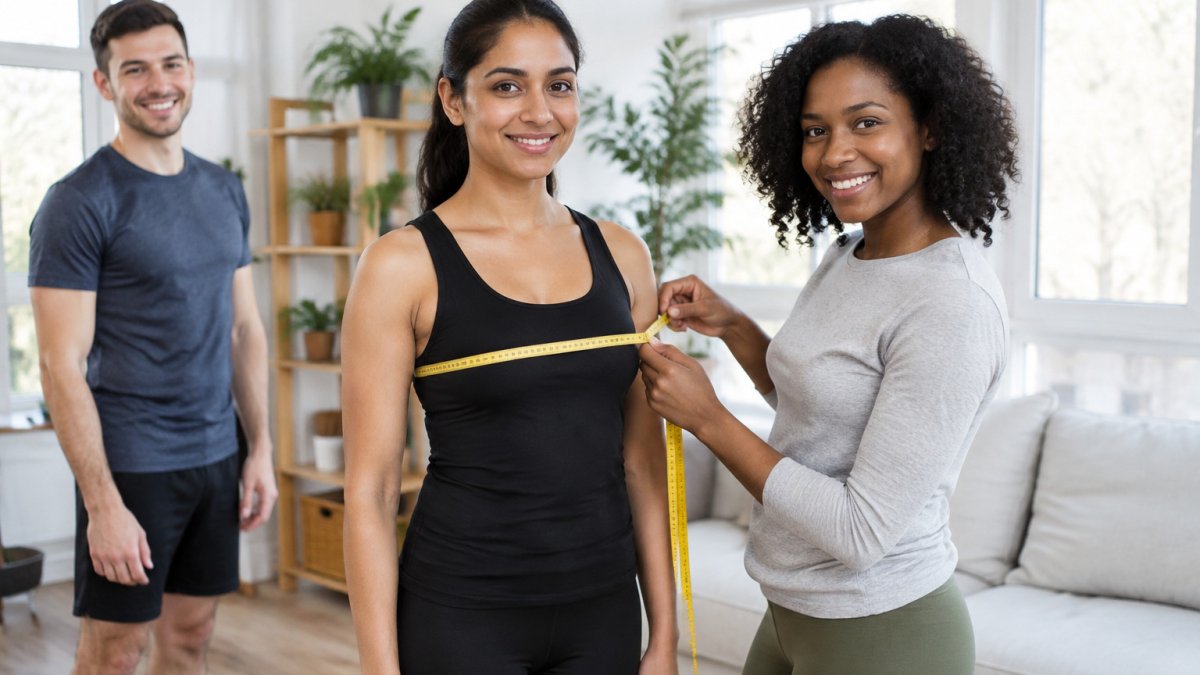
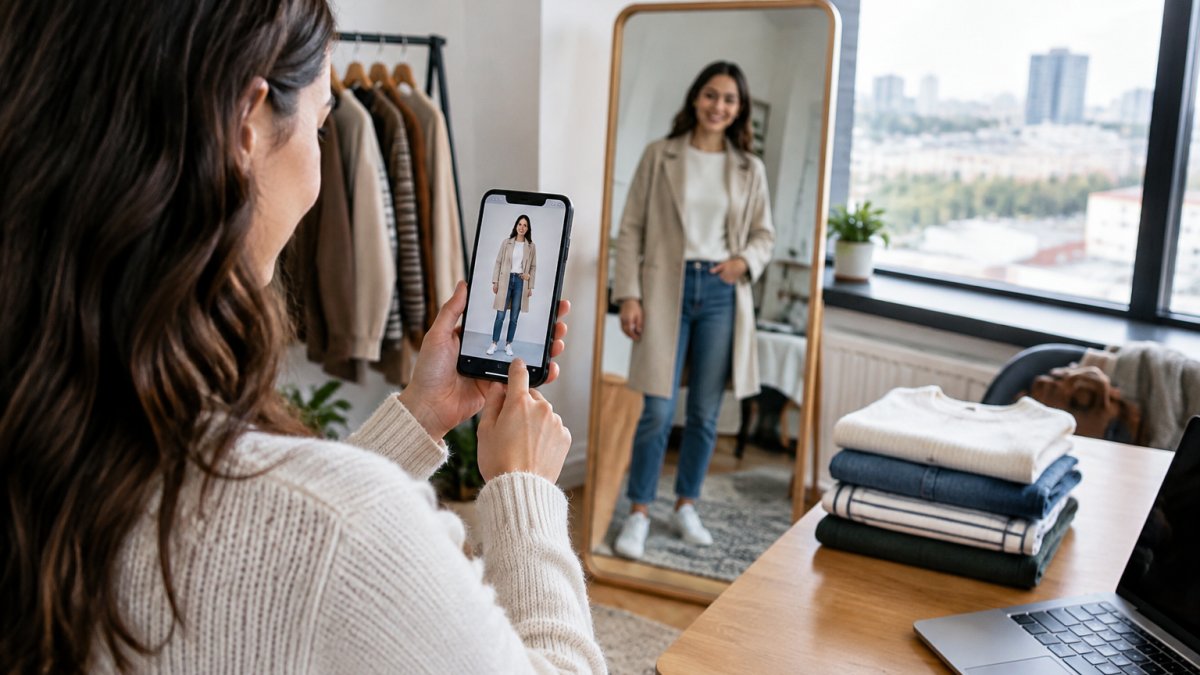
FitScan AI takes full-body photo uploads and returns sizing recommendations tailored to each garment, fabric, and style.
Best for: online apparel buyers who want sizing recommendations from full-body photos.
Rooop
Rooop pairs AI visualization with what it calls fit confidence, positioned toward small and midsize fashion retailers.
The honest limitation: the available results give no verified plan prices or detailed integration information. Ask for both before you commit.
Best for: SMB fashion retailers wanting visualization and fit confidence together. Skip if: you need published pricing and named platform integrations up front.
Texel
Texel combines virtual try-on with size advice inside a single widget for apparel retailers. One widget means one implementation, a real advantage for teams with limited developer time.
What the supplied roundup does not provide is public pricing or named platform integrations. Treat those as questions for a demo call.
Best for: apparel retailers who want try-on and size advice in one widget. Skip if: you need a documented integration list before shortlisting.
Fittingbox, MirrAR and EasyTry
These three appear in G2's virtual fitting software category, which makes them easy to compare on ratings. Fittingbox and MirrAR both show 4.7/5 in the supplied G2 results, while EasyTry shows 4.2/5.
Ratings are a starting filter, not a verdict. The supplied results do not detail features, pricing, or integrations for any of the three, so a category listing tells you they exist and are reviewed, not whether they handle your catalog.
Best for: buyers using G2 reviews as an initial shortlist. Skip if: you need feature-level detail before booking demos.
Faslet and Virtual Fitting Room
These two are the only options in the supplied data with a public price, and that transparency is worth noting. Faslet's listed price in the supplied data is a monthly subscription. Virtual Fitting Room is a Shopify app with a listed monthly or annual plan and a seven-day free trial.
The gap between those two numbers is the whole argument of this section. A $9.99 app and a $199 platform are not the same product, and the supplied results do not detail Faslet's features, integrations, or plan limits. A common pattern is that low-cost Shopify apps cover basic visualization, while higher-priced platforms bundle measurement logic, analytics, or multi-store support.
Best for: buyers who want a listed price before a sales call. Skip if: you need documented feature depth before comparing cost.
How to read this comparison
Use the table as a shortlist tool, not a scorecard. The criteria that decide fit for your store are rarely visible on a pricing page: how the tool handles your apparel categories, whether it integrates with your e-commerce platform, and what data it captures. For a deeper framework, see our guide on size recommendation software options for retailers.
G2 ratings for virtual fitting software
Is There Good Virtual Fitting Room Software Free of Charge?
No. Pricing for the tools in the supplied data is either a paid subscription or contact-for-pricing, and none lists a permanent free tier. The closest thing to free is a trial: the Virtual Fitting Room Shopify app lists a seven-day free trial.
If your search is for the best virtual fitting room software free of charge, adjust expectations. Free trials let you test a widget on a staging store, but they do not cover the real cost of a fitting room: the data and setup behind it.
Test on real products before you scale it.
AI Virtual Try-On Software: What the Fit Confidence Claims Rest On
AI virtual try-on software is only as good as the labeled data behind it. That is the part vendors rarely lead with.
This is where accuracy claims deserve scrutiny. Because measurement quality begins with consistent capture, ETHOS CONCEPT can help frame how body-size measurements should be assessed before they inform a virtual fit.
If accuracy is your deciding factor, ask vendors how they validate fit predictions. For a deeper look at how accurate AI clothing sizing really is, our guide on how accurate AI clothing sizing is walks through the evidence.
Picking a Virtual Fitting Room Shopify App
A virtual fitting room Shopify app should be judged on three things: theme compatibility, catalog coverage, and what happens at checkout. The supplied data gives you one clear budget option. Virtual Fitting Room lists at $9.99 per month or $89.99 per year with a seven-day free trial on the Shopify App Store.
The supplied listing does not describe supported store themes, integrations beyond Shopify, or usage limits. Those questions decide whether an app survives contact with a real catalog.
If you are weighing several size tools rather than one app, our roundup of size recommendation software options for retailers compares the wider field.
Clothing Size Recommendation Software: Body Scanning vs Photo Upload
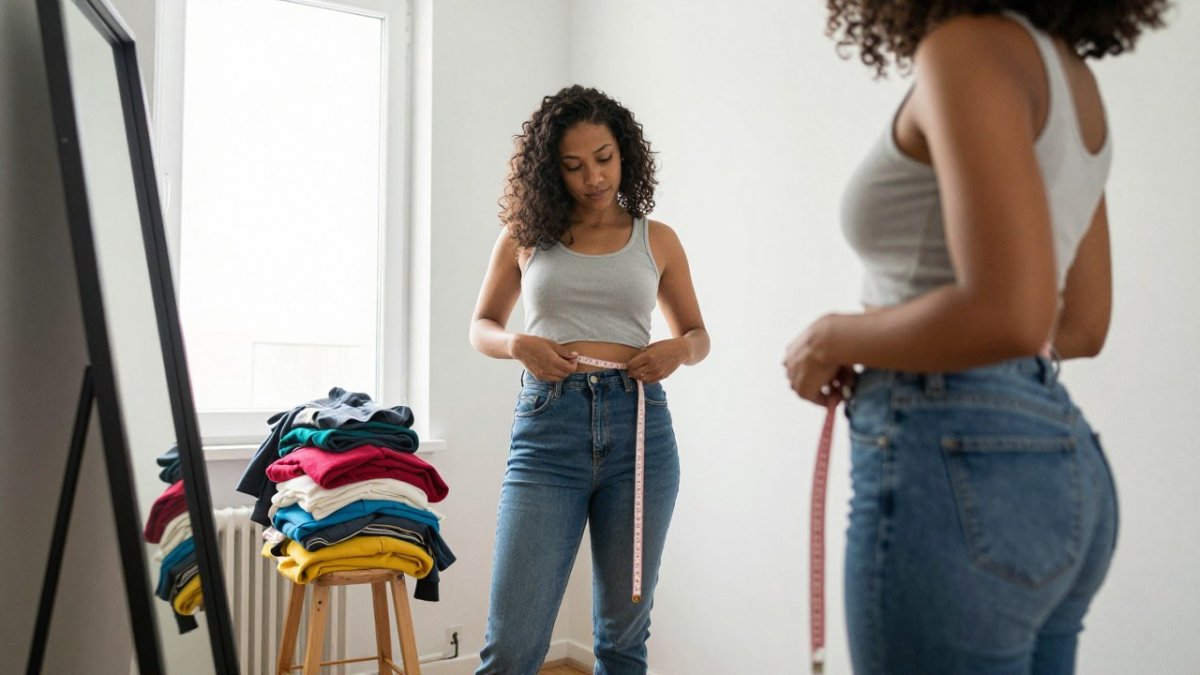
Clothing size recommendation software splits into two capture methods, and the choice shapes everything downstream. Body scanning builds a measurement profile. Photo upload infers fit from images the shopper already has on their phone.
Photo-based capture asks less of the shopper at purchase. A shopper uploads full-body photos and gets recommendations for each garment, fabric, and style, which is how FitScan AI works.
Which is better depends on your return reasons. If returns cluster around "runs small" or "wrong fabric stretch," per-garment recommendations address the cause.
Privacy, Cost and Accessibility: The Criteria Buyers Skip
Three criteria get skipped in most comparisons, and they decide long-term success. Most roundups stop at features and sticker price, but virtual fitting rooms collect some of the most sensitive data in e-commerce and carry hidden costs that surface after launch.
Privacy and biometric data handling
Full-body photos and body measurements can qualify as sensitive personal data under privacy laws in several jurisdictions.
- What is captured? Photos, measurements, or both. Photo upload and body scanning carry different risk profiles.
- Where is it stored and for how long? Look for a stated retention period and a deletion process.
- Is it used to train models? Some vendors use customer images to improve accuracy. Get this in writing.
- What consent flow is built in? The shopper should understand what they are sharing and why before upload.
A common pattern is that vendors describe encryption in transit but are vague about retention. Our guide on whether AI body scanning is safe for privacy covers the questions to put to any vendor.
Watch out: a vendor that cannot answer the retention question in a demo is a vendor that has not built for regulated markets.
Total cost of ownership and ROI
Sticker price is not total cost. The visible subscription is one line item; the rest hides in implementation and operations:
- Setup and integration: theme work, developer time, and QA across devices.
- Content creation: per-garment rules, fabric metadata, and photography if the tool needs specific image formats.
- Hardware: in-store deployments may need cameras, kiosks, or lighting.
A practical ROI framework starts with your current return rate and average order value. If returns run at a meaningful share of revenue and cluster around fit, a fitting room that reduces even a fraction of those returns can pay for itself. Model the math on your own numbers rather than a vendor's case study. For a breakdown of what these tools charge, see our AI clothing fit tool pricing guide.
Accessibility and inclusive fit performance
A fitting room that only works on high-end phones with perfect lighting excludes shoppers. Test on mid-range Android devices, in dim rooms, and on older browsers before launch. Accessibility also means body diversity: ask whether the underlying models were trained on a range of body shapes, sizes, and skin tones, because photo-based capture can perform unevenly across those groups. Run a small pilot with real customers across body types before you scale.
A buyer's checklist
Before you shortlist any tool, confirm: a written data-retention policy, an auditable consent flow, a total-cost estimate that includes integration and content work, and a device and body-diversity test plan. These separate a fitting room that survives real customers from one that becomes a support ticket queue.
Register for FitScan AI and Test Your Own Fit
Fit uncertainty is a data problem, and the fix starts with your own photos. FitScan AI analyzes full-body uploads and returns precise sizing recommendations across every garment, fabric, and style, so you stop guessing between two sizes at checkout.
Ready to see your own recommendations? Subscribe to Fit Perfect AI and run your first FitScan.
The challenge is simple: most shoppers still guess their size, and most stores still pay for those guesses in returns.
Frequently Asked Questions
What is virtual fitting room software and how does it work?
Virtual fitting room software lets shoppers see how a garment is likely to look and fit before buying. Most tools work in one of two ways: they build a body model from photos or a body scan and then match your measurements to each garment's size chart, or they overlay a 3D visualization of the item on your image. The output is a size recommendation or a visual preview.
Is there free virtual fitting room software for small stores?
True free plans are rare. The closest option in this comparison is the Virtual Fitting Room Shopify app, which lists a seven-day free trial, so you can test it before paying. If budget is tight, start with a trial, measure the effect on returns and cart abandonment over a few weeks, then decide whether a paid plan earns its cost.
How accurate are AI size recommendations compared with size charts?
Accuracy depends on the input data. Tools that capture body measurements can have more to work with than a shopper guessing between two chart sizes. Photo-upload tools like FitScan AI provide recommendations for each garment, fabric and style. No tool removes returns entirely, and vendors rarely publish independent accuracy figures, so ask for a trial period and compare recommended sizes against what customers actually keep.
What should I check before uploading full-body photos to a fitting app?
Read the privacy policy before you upload anything. Body photos and measurements count as sensitive personal data, and industry research on virtual dressing rooms notes that implementation quality depends heavily on how well data is labeled and handled. Check whether images are stored or deleted after processing, whether they are shared with third parties, and whether you can request deletion. For retailers, the same questions apply to your customers' data, so put consent and retention terms in writing before launch.
Can a virtual fitting room Shopify app handle different brands' sizing?
Only if the software is built to learn per-garment sizing. Brands cut clothes differently, so a medium at one retailer is not a medium at another. When evaluating a virtual fitting room Shopify app, ask how it ingests your product size charts, whether it supports garment-level rules, and how quickly it updates when you add new stock.