 how-to
Accurate Sizing for Curvy Figures: A Complete Guide
Table of Contents
- Why Accurate Sizing Matters for Curvy Figures
- How to Measure Yourself for Clothes: Step-by-Step
- Understanding Clothing Size Charts for Women
- How to Choose a Clothing Size Between Sizes
- Sewing Pattern Sizes for Curvy Figures
- Fabric, Stretch, and Garment Ease: How They Affect Fit
- Using Technology to Ensure Accurate Sizing
- Common Measurement Mistakes to Avoid
- Frequently Asked Questions
Last Updated: October 12, 2026
Why Accurate Sizing Matters for Curvy Figures
Getting the right size is harder than it should be. Most clothing brands use different measurements. A size 12 at one store might be a 14 at another.
Curvy body shapes have fuller busts, hips, and waists. Standard sizing charts don't always account for these proportions. You end up buying clothes that fit wrong.
This is why accurate sizing for curvy figures matters so much. When you know your real measurements, you can find clothes that actually fit your body. No more returns. No more frustration with inconsistent sizing charts.
At Fit Perfect AI, we understand this challenge. The goal is simple: help you find your perfect fit without the guesswork.
How to Measure Yourself for Clothes: Step-by-Step
Taking accurate body measurements is the foundation of finding the right clothing size. You need the right tools and technique to get measurements that actually work.
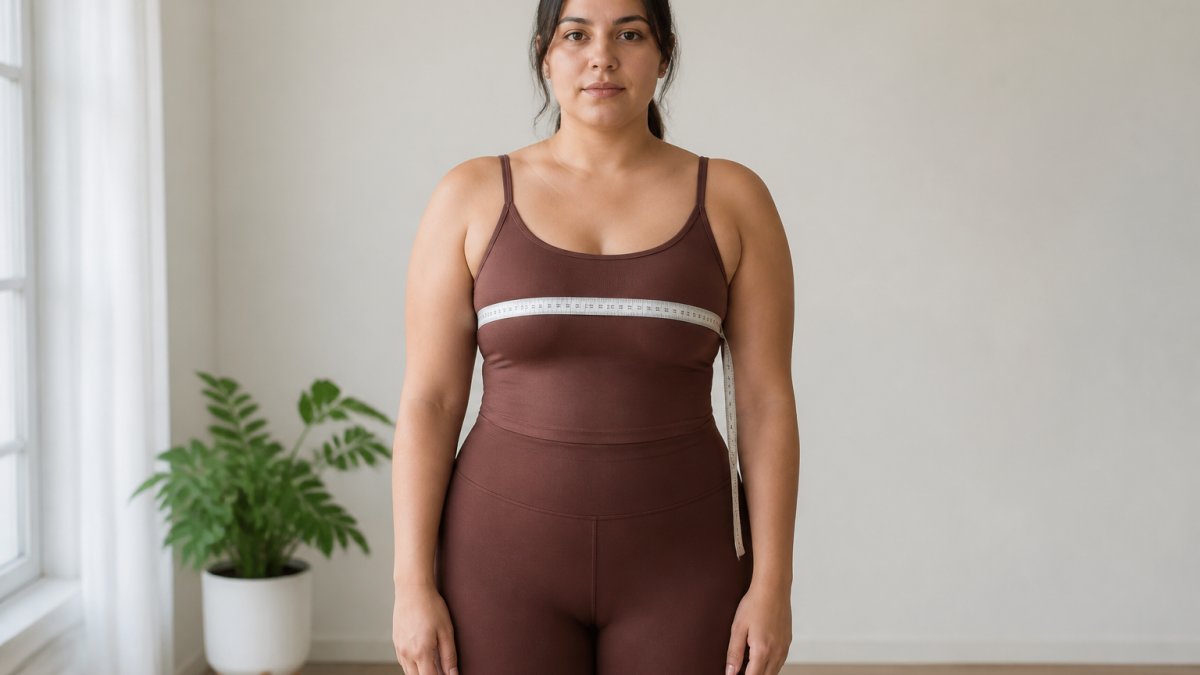
Start with a soft measuring tape. Fabric tapes work better than metal ones because they bend around your curves. Wear minimal clothing or undergarments.
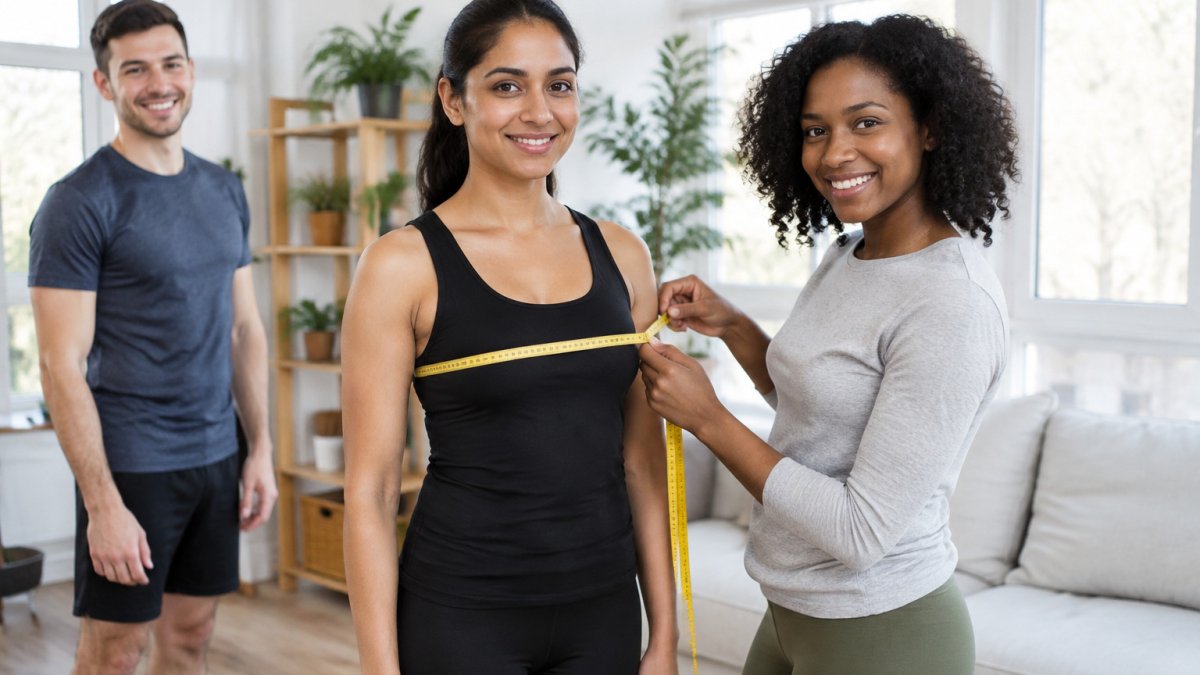
Have a friend help if you can. It's hard to measure yourself accurately, especially around your back and sides. A second person can make sure the tape stays level and snug.
Write down each measurement as you take it. Round to the nearest half inch. Keep these numbers in a notes app or document so you can reference them when shopping.
Measuring Your Bust at the Fullest Point
Your bust measurement is the widest part of your chest. This determines how much room you need across your upper body.
Stand straight. Bring the measuring tape around your back and across the fullest part of your breasts. Keep the tape level all the way around. Don't pull tight. The tape should be snug but not compress your skin.
Write down this number. This is your bust measurement.
Many people measure too high or too low. The fullest point is usually at your nipple line. If you're unsure, measure a few spots and use the largest number.
Measuring Your Waist at the Narrowest Point
Your waist measurement shows how much space you have between your ribs and hips. This is usually your narrowest point.
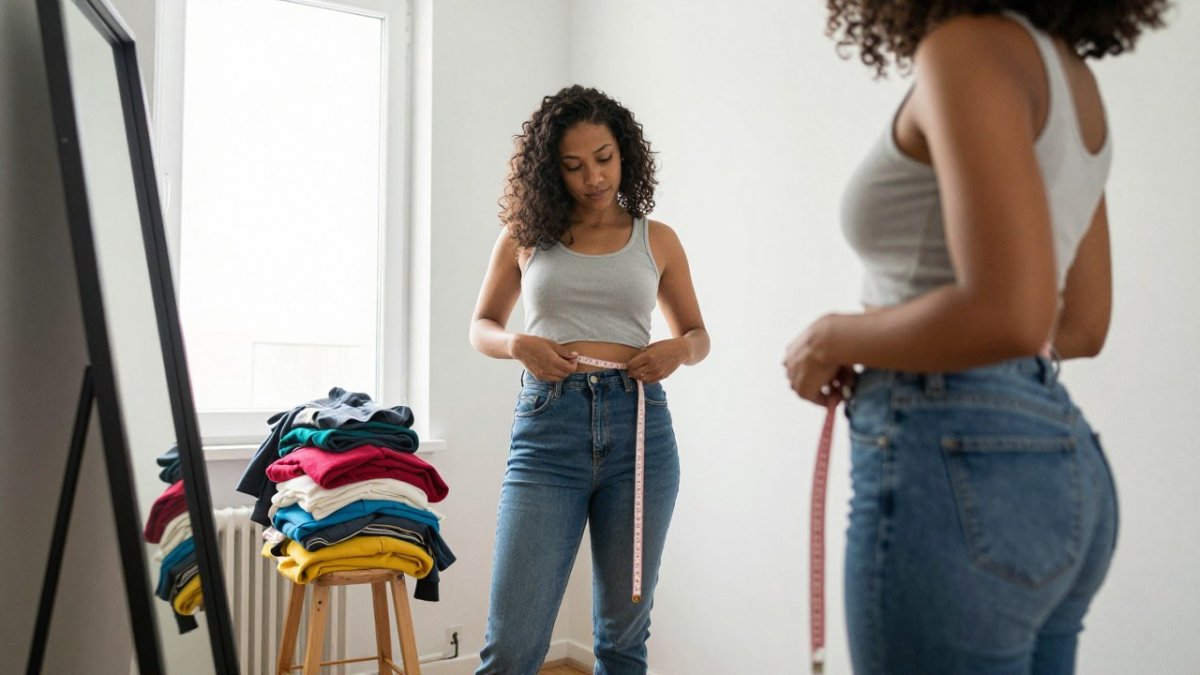
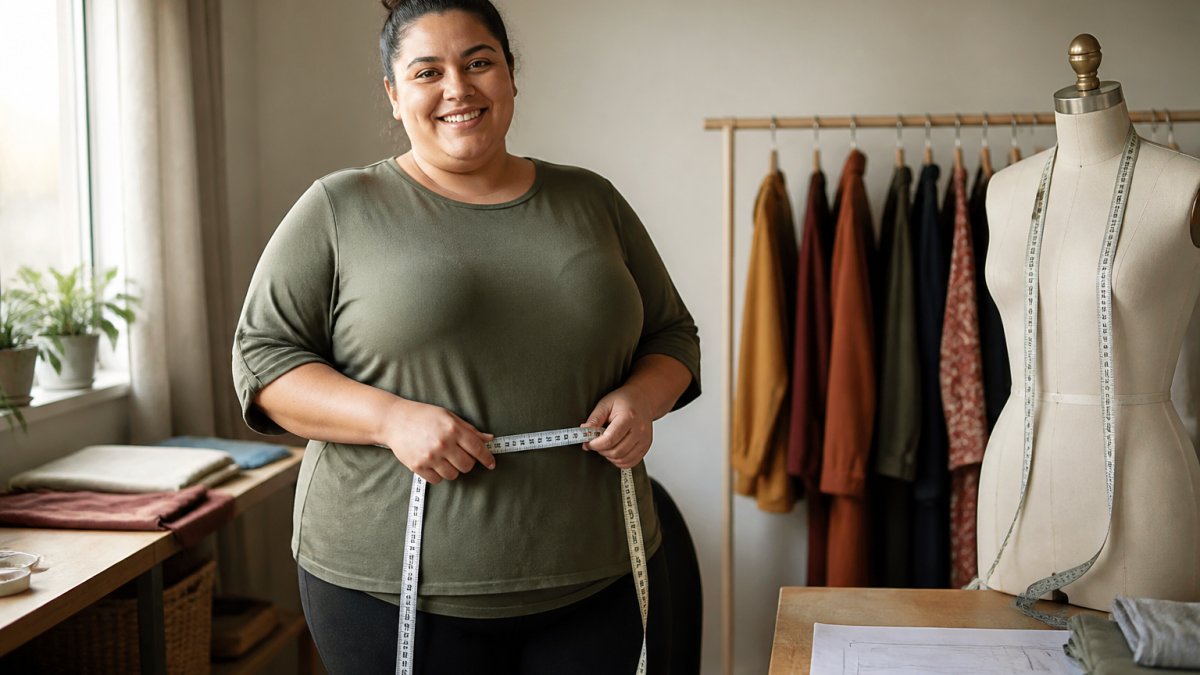
Find the narrowest part of your torso. For some people, this is a few inches above the belly button. For others, it's lower. Bring the tape around this spot. Keep it level and snug.
Don't suck in your stomach. Measure yourself as you normally stand. This gives you a realistic number for how clothes will fit when you wear them.
This measurement matters for pants, dresses, and fitted tops. Waist sizing is where curvy figures often struggle most because standard sizing assumes less curve.
Measuring Your Hips at the Fullest Point
Hip measurement is crucial for pants, skirts, and dresses. This is the fullest part of your hip area.
Stand with your feet a few inches apart. Bring the tape around the widest part of your hips and buttocks. Keep it level. The tape should sit flat and snug.
This measurement often determines whether pants will fit through the thighs and seat. For curvy figures, hip measurement is just as important as waist measurement.
Using a Tape Measure Correctly
A tape measure is only useful if you use it right. Small mistakes lead to wrong sizes.
Keep the tape level. Tilt it up or down and your measurement changes. Use a mirror to check that the tape runs straight around your body.
Don't pull the tape tight. It should be snug enough that you can't slide a finger under it, but not so tight that it compresses your skin. This is the difference between a measurement that works and one that doesn't.
Take each measurement twice. If the two numbers match, you're done. If they're different, take it again. Consistency matters.
Understanding Clothing Size Charts for Women
Size charts are your map to finding the right fit. But they're not all the same.
Different brands use different size charts. A size 8 dress from Brand A might be completely different from a size 8 dress from Brand B. This is why your body measurements matter more than the size label.
When you shop online, always check the size chart first. Don't assume. Compare your measurements to the chart. Look for a size where your bust, waist, and hip measurements all fall within the range.
Most size charts show measurements in inches or centimeters. They list what the garment itself measures, not what size body it fits.
How Brand Sizing Differs Across Retailers
Every retailer sizes differently. This is the core problem with online shopping.
Some brands run small. Their size 10 fits like a size 8 at other brands. Other brands run large. A size 12 feels roomy.
Fabric matters too. A stretchy fabric lets you go down a size. A stiff fabric might need you to size up.
The only way to know how a specific brand sizes is to check their size chart. Don't rely on what worked at another brand. Each one is different.
Keep notes on brands that fit you well. If you find a brand where size 12 is perfect, remember that.
Plus-Size and Curvy Fit Considerations
Plus-size and curvy fit clothing is designed differently than standard sizing. These pieces account for fuller busts, wider hips, and more defined waists.
Curvy fit usually means the garment has more room in the bust and hip area while still fitting the waist.
Plus-size clothing starts at size 14 or 16, depending on the brand. But not all plus-size clothing is curvy fit. Some is just larger versions of standard cuts.
Look for brands that specifically label items as curvy fit or hourglass fit. These are designed for your body shape. They'll fit better than trying to squeeze into standard sizing.
How to Choose a Clothing Size Between Sizes
Sometimes your measurements fall between two sizes. This happens often with curvy figures because your bust, waist, and hips might not all fall in the same size range.
When this happens, decide what matters most. If the bust is tight in the smaller size but the waist fits, choose the larger size.
For dresses, prioritize the bust and hip measurements. These are hard to alter. Waist can be taken in more easily.
For pants, prioritize the hip and thigh measurements. These are the hardest to change. Waist can be adjusted.
Read customer reviews. Other shoppers often mention if something runs small or large. This helps you decide which size to pick when you're between sizes.
Sewing Pattern Sizes for Curvy Figures
If you sew your own clothes, pattern sizing works differently than ready-made clothing. Patterns are graded by bust measurement only.
A pattern graded for a 38-inch bust makes different pieces than one graded for a 40-inch bust.
Many standard patterns don't work well for curvy figures. They assume a certain ratio between bust, waist, and hip. If your proportions are different, the pattern won't fit right.
Look for patterns specifically designed for curvy bodies. These account for fuller busts and curves. They give you a better starting point.
You can also grade patterns yourself. If a pattern fits your bust but not your hip, you can add width at the side seams.
Fabric, Stretch, and Garment Ease: How They Affect Fit
Fabric type changes how a size fits. A stretchy fabric lets you wear a smaller size.
Natural fabrics like cotton and linen have little stretch. They fit based on the garment's actual measurements.
Synthetic blends often have some stretch. A cotton-polyester blend might stretch 2-3 inches.
Knit fabrics have the most stretch. A knit shirt might stretch 4-6 inches. This gives you more size flexibility.
Garment ease is the extra room built into a pattern. A fitted shirt has 1-2 inches of ease. A loose shirt has 4-6 inches.
For curvy figures, ease matters a lot. A dress with 2 inches of ease fits differently than one with 4 inches.
Using Technology to Ensure Accurate Sizing
Digital tools can help you find your perfect fit. Apps and online calculators use your measurements to recommend sizes.
Some tools let you upload photos. They analyze your body shape and proportions. This technology is getting better at accounting for curvy figures and different body types.
Fit Perfect AI uses full-body photos to give you precise sizing recommendations. You upload a photo, and the AI analyzes your proportions.
This technology works because it looks at your actual body shape, not just a single measurement.
Virtual fitting tools let you see how clothes might fit before you buy.
These tools aren't perfect yet. But they're much better than guessing based on a size label.
Common Measurement Mistakes to Avoid
Small errors in measurement lead to wrong sizes.
Measuring over clothing. Always measure in your undergarments or minimal clothing.
Pulling the tape too tight. The tape should be snug but not compressing.
Not keeping the tape level. A tilted tape gives wrong numbers.
Measuring at the wrong spot. The bust goes around the fullest part of your chest.
Measuring inconsistently. Take each measurement twice. If the numbers don't match, measure again.
Ignoring stretch and ease. A stretchy fabric fits smaller than a stiff one.
Using old measurements. Bodies change. Take new measurements every year or when your weight changes.
Many people measure once and then shop based on that number forever. Your body changes.
Finding accurate sizing for curvy figures takes effort. You spend less time on returns and more time wearing clothes you actually love. Fit Perfect AI makes this easier by analyzing your body shape and recommending sizes that work for you across different brands and styles. Register with Fit Perfect AI today and get precise sizing recommendations tailored to your curvy figure.
Frequently Asked Questions
How do I measure myself accurately for clothing?
Stand straight without holding your breath, wearing minimal or no clothing. Use a soft tape measure and keep it parallel to the ground. Measure your bust at the fullest point, waist at the narrowest point, and hips at the fullest point. Write down measurements to the nearest half-inch or centimetre. Measure twice to confirm accuracy. For accurate sizing for curvy figures, ensure the tape is snug but not tight, as this affects how garments will actually fit your body.
Why do different brands have different sizing for the same size label?
Brand sizing varies because manufacturers set their own fit standards, fabric choices, and production locations. A size 12 at one retailer may differ significantly from another due to different grading systems, stretch fabrics, and intended fit (oversized, standard, or fitted). This inconsistency makes understanding your individual body measurements essential rather than relying solely on size labels across different brands.
What should I do when my bust, waist, and hips fall into different size ranges?
When measurements span multiple sizes, prioritize the largest measurement to ensure the garment accommodates your fullest point. For curvy figures with significant differences between measurements, choose the size that fits your bust or hips (whichever is largest) and look for styles with ruching, belts, or adjustable elements at the waist. Many retailers offer fit notes indicating which styles work best for proportioned or hourglass figures, helping you find pieces designed for your body shape.
Are sewing pattern sizes different from ready-to-wear clothing sizes?
Yes, sewing pattern sizes differ significantly from retail clothing sizes. Pattern grading systems are based on different body measurement standards and often run smaller or larger than commercial sizes. When selecting sewing pattern sizes for curvy figures, measure yourself precisely and compare your measurements directly to the pattern's measurement chart rather than using your usual retail size. Patterns designed for curvy figures typically include graded options across multiple sizes to accommodate different proportions.