 how-to
Solve Inconsistent Brand Sizing Issues: A How-To
Table of Contents
- Why Clothing Sizes Vary Between Brands
- How to Measure Your Body for Clothing Size
- How to Compare Clothing Size Charts Across Brands
- Using a Clothing Size Calculator for Consistent Fit
- Understanding Clothing Size Conversion Charts
- How Body Shape and Fit Preferences Affect Your Size
- Reducing Returns by Getting Sizing Right the First Time
- Frequently Asked Questions
Last Updated: October 17, 2026
Why Clothing Sizes Vary Between Brands
Clothing sizes are not standardized across brands. One brand's medium is another's large. This inconsistent brand sizing frustrates shoppers and drives returns.
**1.
**2.
3. Measurement points and tolerances vary. Two brands can both list a "chest" measurement but take it at different points (armhole-to-armhole vs. 1 inch below the armhole) and allow different tolerances (how much a production garment may deviate from spec).
4. Fabric and construction change the finished fit. Knit vs. woven, stretch percentage, shrinkage after wash, and lining all shift how a garment measures and drapes.
5. Production runs drift. Factories cut and sew to spec, but equipment, operator technique, and fabric lot variation introduce small deviations. Brands that inspect measurement samples and monitor deviations catch this; brands that don't ship inconsistent sizing to customers.
6. Body shape and proportions. A brand designed for athletic builds will fit curvy bodies differently than a brand designed for pear-shaped bodies.
The result: you can't trust size alone. You need to measure your body and compare it to each brand's specific measurements, and, where possible, look for brands that publish measurement points, tolerances, and fit notes.
How to Measure Your Body for Clothing Size
Key measurements you need
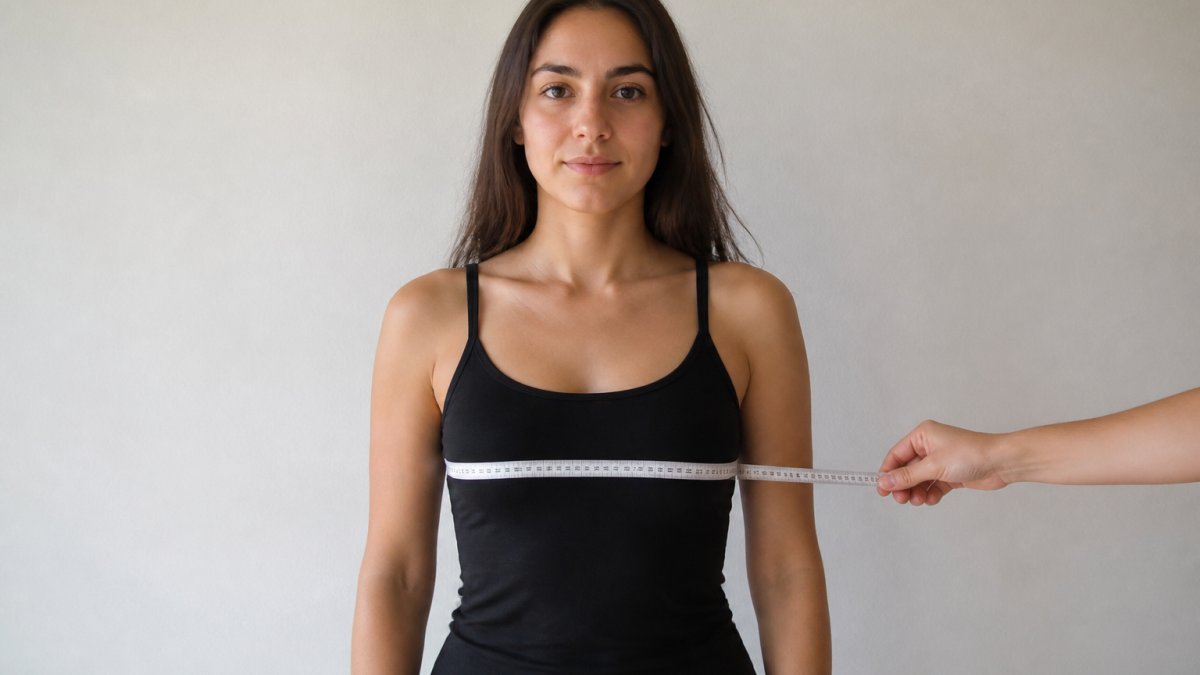
You need five core measurements to find your size across any brand. These measurements work for tops, dresses, and bottoms.
The five measurements are:
- Chest or bust
- Waist
- Hip
- Shoulder width
- Sleeve length (for tops)
For bottoms, you'll also need inseam length. This is the distance from your inner thigh to your ankle.
Getting accurate measurements
Accurate measurements require the right technique. Small mistakes create big fit problems.
Follow these steps:
-
Wear fitted clothes or undergarments. Loose clothing adds inches to your measurements. You want to measure your actual body, not the clothes.
-
Stand straight and relaxed. Don't suck in your stomach. Don't puff out your chest. Stand as you normally would.
-
Use a soft measuring tape. A fabric tape measure works better than a rigid ruler. It bends around your body curves.
-
Measure at the widest point. For bust, measure across the fullest part of your chest. For waist, measure at the narrowest point. For hips, measure at the fullest part of your hip.
-
Keep the tape snug but not tight. The tape should touch your skin without pinching. You should be able to slip one finger under the tape.
-
Write down each measurement. Record measurements in both inches and centimeters. Different brands use different units.
-
Measure twice. Take each measurement two times. If the numbers differ, take the average.
How to Compare Clothing Size Charts Across Brands
Size charts tell you what measurements fit each size. But brands present this information differently. Some use inches. Some use centimeters. Some list bust measurements. Others list chest measurements.
The key is translating your measurements into each brand's language.
Here's the process:
-
Find the brand's size chart. Look on their website, usually near the product page or in their help section.
-
Locate your measurements in the chart. Find the row that matches your chest or bust measurement.
-
Check the corresponding size. The size listed in that row is your size for that brand.
-
Verify with a second measurement. Check your waist or hip measurement against the same size. All your measurements should fall within that size's range.
-
Compare across brands. Take your measurements and check three brands you like. You'll see that your size changes between them.
A common mistake is trusting reviews over measurements. Someone might say "I'm usually a medium and this runs small." But that reviewer's medium might be a different size than yours. Your actual measurements matter more than what size you usually wear.
Using a Clothing Size Calculator for Consistent Fit
A clothing size calculator takes your measurements and recommends sizes across multiple brands. This saves time and reduces guesswork.
How it works: You enter your measurements once. The calculator compares them to each brand's size chart. It recommends the best size for each brand.
The benefit is speed. Instead of checking five different size charts manually, the calculator does it instantly. You get a personalized recommendation for every brand you shop.
At Fit Perfect AI, we've built this technology to work with full-body photos. By simply uploading full-body photos, users receive precise sizing recommendations tailored to every garment, fabric, and style. This technology streamlines the shopping experience, ensuring you always select the right size for your unique body type.
The calculator approach works best when:
- You shop multiple brands regularly
- You want to avoid returns
- You value speed and accuracy
- You have a body type that doesn't fit standard sizing
Understanding Clothing Size Conversion Charts
Size conversion charts translate sizes between different systems. A US medium converts to a UK 12 or a EU 40. But conversion charts have limits.
The problem: conversion assumes all brands size the same way. They don't. A US medium from Brand A is not the same as a US medium from Brand B.
Conversion charts work only when comparing the same brand across countries. If you know your size in US sizing for a specific brand, you can use a conversion chart to find your size in UK or EU sizing for that same brand.
For comparing different brands, measurements work better than conversions. Measurements are specific. Conversions are approximate.
Use conversion charts only as a starting point. Always verify with the specific brand's size chart and your actual measurements.
How Body Shape and Fit Preferences Affect Your Size
Your body shape influences how clothes fit. Two people with the same chest measurement might wear different sizes because their proportions differ.
Body shape affects fit in several ways:
- Shoulder width. Narrow shoulders need tighter tops. Broad shoulders need looser tops.
- Bust-to-waist ratio. A defined waist needs fitted styles. A straight body shape needs looser styles.
- Hip-to-waist ratio. Curvy hips need more room in the hip area. Straight hips need less.
- Arm length. Long arms need longer sleeves. Short arms need shorter sleeves.
- Torso length. A long torso needs longer tops and longer dresses. A short torso needs cropped styles.
Fit preferences also matter. Some people like tight fits. Others prefer loose fits. A brand's fit preference might not match yours.
This is where inclusive sizing becomes important. A brand that designs only for one body type will fit that type well and other types poorly. Brands that test fit across multiple body shapes create better sizing for everyone.
When choosing a brand, check if they offer size ranges that match your body shape. A brand with sizes XS to 3XL shows they're thinking about different body types. A brand with only S, M, L might not fit as many shapes well.
Reducing Returns by Getting Sizing Right the First Time
Returns cost money and time. Getting sizing right the first time saves both, but "measure carefully" is only half the story. The other half is knowing which sizing changes actually reduce returns, and measuring them.
For shoppers: a repeatable pre-purchase routine
- Measure before you buy. Never guess your size. Measure and compare to the size chart.
- Read the brand's fit notes. Many brands describe whether styles run small, large, or true to size. Use this information.
- Check customer reviews for fit feedback. Look for comments about sizing. Ignore comments about personal preference and focus on fit accuracy.
- Use a sizing tool if available. Tools that compare your measurements to each brand's chart reduce errors.
- Order your true size, not your usual size. Your usual size from one brand doesn't transfer to another brand.
- Keep detailed measurements. Track your measurements over time. Bodies change. Update your measurements annually.
For brands: measure whether sizing changes work
A common pattern is that brands change size charts or fit blocks and assume returns will fall. Without a measurement plan, you can't tell whether the change helped, hurt, or did nothing. A practical plan tracks a small set of fit-related metrics before and after a change:
- Fit-related return rate, returns coded as "too small," "too large," or "fit" as a share of units sold, not total returns. This isolates sizing from other return reasons.
- Size exchange rate, how often shoppers exchange for a different size, and in which direction. A spike in exchanges from S to M suggests the small end is running tight.
- Size-recommendation acceptance, if you use a size advisor or fit tool, the share of shoppers who accept the recommended size and keep it.
- Customer feedback themes, fit comments in reviews and support tickets, grouped by size and style.
Set realistic expectations. Sizing changes rarely eliminate returns; they shift them. A change that reduces "too small" returns may increase "too large" returns if the grade rules overshoot. The goal is a net reduction in fit-related returns and exchanges, not zero.
Manual vs. technology. Manual processes, publishing clearer size charts, adding fit notes, training support staff, are low-cost and can move the needle. Fit technology and size advisors add personalization but require clean measurement data and raise privacy questions about how shopper measurements are stored and used.
Brands benefit from accurate sizing too. Lower return rates mean happier customers and better profit margins. This is why many brands now invest in sizing technology, and why the ones that measure the impact of their changes get more from that investment.
At Fit Perfect AI, we help shoppers find their perfect fit by analyzing body shape and recommending sizes for every garment and fabric. This technology delivers precise sizing recommendations.
Frequently Asked Questions
Why is sizing so inconsistent between clothing brands?
Inconsistent brand sizing stems from differences in pattern grading, target fit preferences, and manufacturing standards. Each brand develops its own sizing strategy based on its intended customer body shape and fit philosophy. A brand targeting a slim fit will grade patterns differently than one emphasizing comfort and room. Additionally, garments made by different suppliers using different materials and production methods create variation in the final fit, even when labeled the same size.
How do I measure myself accurately for online clothing shopping?
Measure key areas: chest (across the fullest part), waist (at your natural waist), hips (at the fullest part), and inseam (from your inner thigh to ankle). Wear fitted clothing or undergarments, keep the measuring tape snug but not tight, and have someone help if possible. Record measurements in centimeters for consistency. Take photos or notes of these measurements and compare them against each brand's specific size chart before purchasing, as brands interpret the same measurements differently.
Do clothing size calculators actually help with inconsistent brand sizing?
Clothing size calculators can help when they account for brand-specific fit data. A basic calculator that converts your measurements to generic sizes has limited value. More effective tools analyze your body measurements against individual brand sizing systems and product-specific fit data, learning patterns from customer feedback and returns. These tools work best when you input accurate measurements and the calculator has access to extensive brand sizing databases to identify which brands typically run large, small, or true to size.
Should I size up or down when shopping between brands?
There's no universal rule, it depends on the specific brand's sizing strategy and the garment type. Some brands consistently run large, others small, and many vary by product category. The most reliable approach is to check each brand's size chart, read customer reviews mentioning fit, and compare your measurements against that specific brand's grading. Apparel brands often provide fit feedback in reviews; use that data to decide whether to size up, down, or stay true to your usual size for that particular brand.