 how-to
How to Stop Returning Clothes: A Fit Guide
Table of Contents
- Why You Keep Returning Clothes
- How to Measure Yourself for Clothes Accurately
- Why Clothing Sizes Vary Between Brands
- Using a Clothing Size Chart Before You Buy
- Your Pre-Purchase Fit and Sizing Checklist
- Using a Clothing Size Calculator to Find Your Perfect Fit
- Deciding: Keep, Alter, Exchange, or Return
- Frequently Asked Questions
Last Updated: October 7, 2026
Why You Keep Returning Clothes
You're not alone in this.
Online shopping removes the fitting room. You can't feel the fabric. You can't see how colors look on your skin tone.
The real problem isn't that you're picky. A size 8 at one retailer might be a size 10 at another (Evaluating machine learning models for clothing size prediction using anthropometric...).
But sizing is only one layer.
1. Expectation gap. Product photos are lit, styled, and pinned. The model is often taller or differently proportioned than you.
**2.
3. Wardrobe mismatch. You buy a beautiful piece, but it doesn't go with anything you own.
4. Fit drift. Your body changes. Weight fluctuates, posture shifts, and the clothes you bought two years ago may not match your current measurements.
5. Return policy as a safety net. When returns are free and easy, the cost of a bad purchase feels low.
Understanding why this happens is the first step to helping you stop returning clothes.
How to Measure Yourself for Clothes Accurately
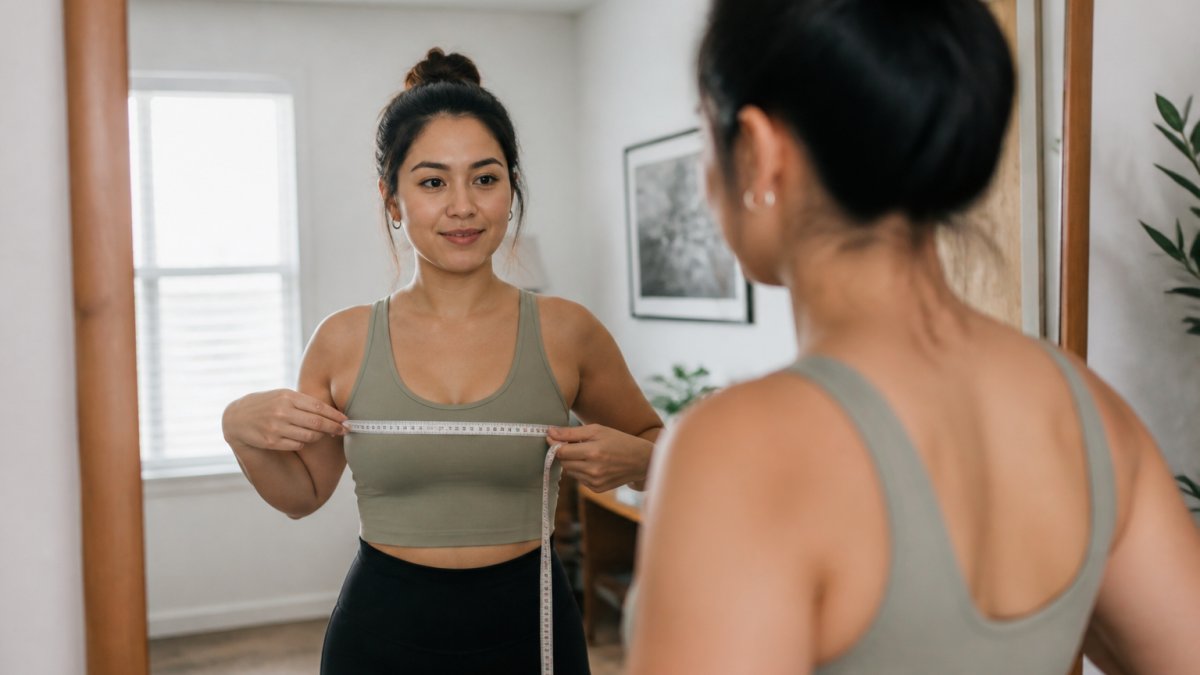
Accurate measurements are the foundation of finding clothes that fit. You can't rely on your memory or old sizes from other brands. Each measurement needs to be precise.
Essential measurements to take
Start with these core measurements. They cover most clothing needs:
- Bust or chest: Measure around the fullest part of your chest
- Waist: Measure around your natural waistline, where your body bends
- Hips: Measure around the fullest part of your hips and buttocks
- Shoulder width: Measure from shoulder bone to shoulder bone across your back
- Sleeve length: Measure from the center back neck, across your shoulder, to your wrist
- Inseam: Measure from your inner thigh down to your ankle bone
- Torso length: Measure from the base of your neck to your waist
Write these down. Keep them in your phone or a note. You'll reference them constantly.
Tools you need for accurate measurements
You don't need expensive equipment. A soft measuring tape is all that matters.
- Soft measuring tape: Get a flexible fabric tape, not a metal one. Metal tapes are stiff and won't drape properly around your body.
- Mirror: A full-length mirror helps you see if the tape is level and not twisted.
- Helper (optional): A second person can measure your back and shoulders more accurately. If you're alone, use a mirror to check that the tape sits straight.
- Pen and paper: Record every measurement immediately. Don't rely on memory.
Stand in fitted clothing or underwear. Wear clothes that show your body shape, not loose ones that hide it. Don't pull the tape tight. Let it sit gently against your skin with just enough give to fit a finger underneath.
Take measurements twice. If they match, you're done. If they differ, take a third measurement and use the middle value.
Why Clothing Sizes Vary Between Brands
This is the core reason you keep returning clothes. Sizes aren't standardized. No government body sets what a "size 8" actually means. Each brand decides for itself.
A brand targeting teenagers uses different measurements than one targeting professional women. A luxury brand cuts differently than a fast-fashion brand. Even the same brand changes sizing between seasons or product lines.
Fabric also changes fit. A cotton t-shirt fits differently than a polyester blend. Stretchy fabrics hide sizing inconsistencies. Rigid fabrics expose them. A dress with no stretch needs to be sized generously.
This isn't a mistake or a quality issue. It's intentional. Brands use sizing strategically to appeal to their target customer and manage production costs.
The consequence: your size varies by brand. You might be a size 6 at one retailer and a size 10 at another. This is normal.
Using a Clothing Size Chart Before You Buy
Size charts are your best friend. But most people use them wrong.
A good size chart shows actual garment measurements, not body sizes. It tells you how wide the chest is, how long the sleeve is, how much room there is in the hips. You compare these numbers to your own measurements.
How to read size charts correctly
Find the size chart on the product page. It should show measurements in inches or centimeters for each size.
Look for these columns:
- Bust or chest width
- Waist width
- Hip width
- Length (from shoulder to hem)
- Sleeve length
Match your measurements to the chart. If your bust is 36 inches, find the size where the bust measurement is closest to 36 inches. Don't pick the size that matches your body size, pick the size where the garment dimensions match what you need.
Pay attention to fit notes. Many charts include comments like "runs small" or "generous fit." These matter. A size that's cut generously might be too loose even if the measurements look right.
Red flags in product descriptions
Watch for these warning signs:
- No size chart: If a brand doesn't provide measurements, skip it. You're guessing.
- Vague fit descriptions: "True to size" or "standard fit" tells you nothing. Specific details matter.
- No fabric content listed: Fabric changes everything. A 100% cotton shirt fits differently than a cotton-poly blend.
- No return policy stated: If returns aren't easy, the brand isn't confident in fit consistency.
- Photos from only one angle: You can't judge fit from a front view alone. You need side and back photos too.
Read customer reviews focused on fit. Ignore comments about style. Look for patterns: "Runs small," "Sleeves are long," "Cuts narrow in the hips." Real customer feedback beats marketing copy.
Your Pre-Purchase Fit and Sizing Checklist
Use this checklist before you buy anything online. It takes two minutes and prevents most returns.
- I have taken my current measurements in the last month
- The brand has a detailed size chart with actual garment measurements
- My measurements match the size chart for at least two dimensions (bust and length, for example)
- I've read the fit notes and understand how this brand cuts (runs small, generous, narrow, etc.)
- I can see the product from multiple angles: front, side, and back
- The fabric content is listed, and I understand how it affects fit (stretch percentage, natural vs. synthetic)
- Customer reviews mention fit, and most say it fits as expected
- The return policy allows returns within at least 30 days
- The product description mentions specific measurements (sleeve length, inseam, etc.)
- I'm not buying this on impulse, I've thought about it for at least 24 hours
If you can't check all of these boxes, don't buy it. The return risk is too high.
Using a Clothing Size Calculator to Find Your Perfect Fit
A clothing size calculator uses your measurements to predict your size across different brands. The best ones learn brand-specific sizing patterns instead of relying on a single generic chart.
Here's how they typically work. You enter your bust, waist, hip, and sometimes height and inseam measurements. The calculator compares those numbers to a database of garment measurements from specific brands and styles.
That distinction matters. A generic calculator that maps your body to a standard size chart will still send you the wrong size at brands that cut inconsistently.
What to look for in a size calculator:
- Brand-specific data. It should reference actual garment measurements from the brands you shop, not just a universal size chart.
- Style-level accuracy. Two dresses from the same brand can fit differently. The best tools account for the specific item.
- Transparent inputs. You should know exactly which measurements it uses and how it weights them.
- No guesswork on your end. If it asks for vague inputs like "small, medium, large," it's not doing real measurement matching.
What a calculator can't fix:
- Fabric behavior. A rigid linen blazer and a stretch jersey top fit differently even at the same measurements.
- Personal preference. Some people like a looser fit, some prefer a closer cut. A calculator can't know your taste.
- Body changes. If your measurements are outdated, the recommendation will be too.
Use a calculator as one input, not the only one. Combine its recommendation with the size chart, fabric details, and customer fit reviews. If all three point to the same size, your confidence should be high.
Deciding: Keep, Alter, Exchange, or Return
When something arrives and doesn't fit perfectly, you have four options. Choose the right one.
Keep it if:
- It fits well enough in the key areas (chest, waist, hips)
- Any tightness is in the sleeves or length only
- You'll wear it regularly despite the minor fit issue
- The fabric feels good and the color is right
Alter it if:
- The fit is good but the length is wrong
- Sleeves need shortening
- The waist needs taking in
- Alterations cost less than buying a replacement
- You love everything else about the piece
Exchange it if:
- The brand offers free exchanges
- A different size is clearly better based on the size chart
- You don't want to wait for alterations
- The fit issue is obvious and not minor
Return it if:
- The fit is fundamentally wrong in multiple areas
- Alterations would be expensive
- The fabric quality is poor
- You're not confident you'll wear it
- The return window is still open
Most returns happen because people return items they could have kept. Before you return, ask yourself: would I keep this if returns weren't an option? If the answer is yes, keep it. If it's no, return it.
Finding clothes that fit doesn't require luck. It requires a system. Measure yourself accurately. Check size charts before buying. Understand how brands cut differently. Use tools that provide brand-specific sizing recommendations. These steps eliminate most returns.
The goal isn't to never return anything, sometimes returns are the right choice. The goal is to make intentional purchase decisions so returns become rare instead of routine. When you shop with your measurements and use accurate sizing data, you keep clothes instead of cycling through returns.
Frequently Asked Questions
How can I stop buying clothes that don't fit?
Start by taking accurate body measurements and comparing them to size charts before ordering. Use a clothing size calculator to match your specific dimensions to each brand's sizing. Read product reviews for fit feedback, check fabric details and garment construction, and avoid impulse purchases by waiting 24 hours before checking out. Many online shoppers reduce returns by 60-70% simply by verifying measurements against the actual size chart rather than guessing their usual size.
Why do clothing sizes vary between brands so much?
Clothing sizes vary because brands use different manufacturing facilities, target different body types, and set their own sizing standards. A size 10 at one retailer may fit very differently at another due to different patterns, fabric stretch, and brand positioning. Zara tends to run small, while H&M runs larger. Luxury brands often use smaller sizing than fast fashion. Understanding these brand quirks and always checking the specific size chart for each retailer prevents the mismatch that leads to returns.
How do I measure myself for clothes when shopping online?
Measure your bust, waist, hips, inseam, and sleeve length using a soft measuring tape against your body, not over clothing. Keep measurements in the units the retailer uses (inches or centimetres). Measure at the fullest part of each area and keep notes of your key measurements. When shopping, compare your measurements directly to the product's size chart rather than selecting your usual size. Many returns happen because shoppers skip this step and assume sizing is consistent across brands.
Can AI sizing tools like FitScan actually reduce my returns?
AI sizing tools work best when combined with accurate body measurements and brand-specific size charts. They work best for shoppers who struggle with inconsistent sizing or have non-standard proportions, and they're most effective when you also read product reviews for fit feedback.