 ultimate-guide
How to Find Your Perfect Fit Every Time?
Last Updated: October 26, 2026
Quick Summary
Perfect fit clothing starts with accurate body measurements compared against brand-specific size charts, since sizing standards vary significantly across brands. Understanding how clothes should fit by garment type, from shoulder seam alignment to sleeve length, helps you identify whether to size up, size down, or tailor for the best result.
- Shoulder seam alignment is the most critical fit marker because it's the hardest dimension to alter
- Accurate measurements should be taken at the same time of day in fitted undergarments using a soft measuring tape
- Different brands use different sizing standards, fit models, and target body types, creating inconsistent sizing across retailers
- Size up when too tight across chest, shoulders, or hips; size down when loose through the body but shoulders fit well
- Tailoring is worth the investment on expensive garments like suits and event dresses but not on low-cost pieces
Table of Contents
- Why Finding Your Perfect Fit Matters
- How to Measure Your Body for Clothes Accurately
- Why Clothing Sizes Are Inconsistent Across Brands
- Using a Clothing Size Calculator for Your Body Type
- How Clothes Should Fit: A Complete Guide by Garment
- Fit Checks: Shoulders, Chest, Waist, and Length
- Comparing Your Measurements Against Brand Size Charts
- When to Size Up, Size Down, or Tailor Your Clothes
- Frequently Asked Questions
Why Finding Your Perfect Fit Matters
Fit is one of the most underrated aspects of a working wardrobe: perfect fit clothing that doesn't fit properly sits unworn, no matter how beautiful it is.
Clothing size and garment fit are not the same thing: a garment may need alterations even when its labeled size seems right.
Returns cost time, money, and environmental resources. Getting it right the first time saves all three.
How to Measure Your Body for Clothes Accurately
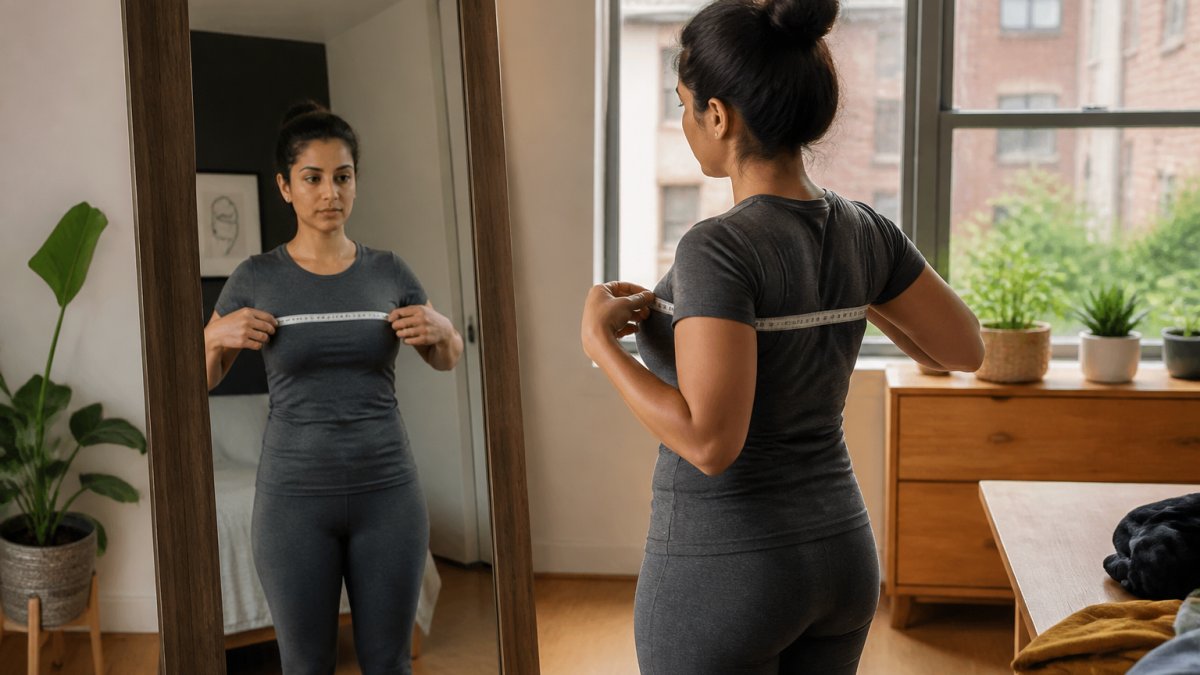
Accurate body measurements are the foundation of finding perfect fit clothing; without precise readings, even the best size calculator or brand chart becomes unreliable. Most people measure once and assume the numbers stay constant, but measurements shift seasonally, after exercise routines change, or over time.
Key Measurements You Need
The measurements that matter depend on what you're buying, but several are universal: neck, chest, waist, hip, shoulder width, sleeve length, and inseam.
Chest measurement (at the fullest part of your bust) is essential for shirts, dresses, and outerwear.
Sleeve length is measured from the center back neck, across the shoulder, down the arm to your wrist bone with your arm slightly bent.
Getting Precise Readings
Use a soft measuring tape, not a rigid ruler.
For chest and waist, have someone else take the reading if possible; measuring your own torso accurately is nearly impossible because you can't maintain consistent tension and positioning.
Write down every measurement immediately, and take them at the same time of day if possible, since morning and evening measurements differ slightly.
Why Clothing Sizes Are Inconsistent Across Brands
Being a size 8 at one brand and a size 12 at another isn't in your head.
Different brands use different sizing standards, fit models, and target body types.
Research published in the journal Ergonomics in Design found that fit-test protocols vary significantly depending on the product being tested.
Fabric plays a role too. A cotton shirt shrinks differently than a cotton-polyester blend; a knit dress stretches while a woven one doesn't.
The solution isn't to memorize your size at each brand. It's to use clothing size calculators that learn brand-specific quirks, compare your actual measurements against each brand's specific size chart, and understand that your measurements, not the label, are your true reference point.
Using a Clothing Size Calculator for Your Body Type
A clothing size calculator removes guesswork by comparing your measurements against brand-specific data. Some calculators take your measurements or photos and cross-reference them against garments and customer fit feedback.
You input your chest, waist, hips, shoulder width, sleeve length, and inseam.
The advantage is speed and accuracy: instead of checking size charts manually for every brand, you get a specific recommendation.
How Clothes Should Fit: A Complete Guide by Garment
Fit standards vary by garment type because different pieces serve different purposes and move differently on your body. Understanding garment-specific standards prevents incorrect decisions when something feels slightly off.
Shirt and Dress Fit Essentials
A well-fitting shirt or dress should let you move freely without pulling or excess fabric.
The chest should have enough room to breathe: one finger comfortably between fabric and body.
On button-up shirts, buttons should lay flat without pulling or gaping.
For dresses, fit depends on style. A fitted dress should follow your curves without restricting movement; a loose or oversized dress should have intentional volume.
Trousers, Jeans, and Bottoms
Bottoms have the most specific fit requirements because they determine your silhouette from the waist down.
The rise, the distance from the crotch seam to the top of the waistband, determines where pants sit: low rise below the hip bones, mid-rise at them, high rise above.
The thigh should have room to move without pulling or bunching, especially in denim, which stretches less than other fabrics.
Fit preferences differ mainly in room through the thigh and leg opening.
Outerwear and Layering Pieces
Outerwear needs enough room to layer underneath without restricting movement.
Sleeve length on jackets should end at your wrist bone or slightly above, depending on style; longer sleeves can be pushed up, shorter ones can't be lengthened.
The chest should fit comfortably over a thin layer or shirt, fastening without pulling. For a winter coat, measure yourself wearing what you'd normally layer underneath.
Fit Checks: Shoulders, Chest, Waist, and Length
Once a garment arrives, knowing how to evaluate fit prevents you from accepting something that won't work. These checks cover the areas where fit problems most commonly occur.
Shoulder and Chest Alignment
The shoulder seam is your first checkpoint. In front of a mirror, check that it aligns with your actual shoulder point, the bone at the top of your arm.
The chest should feel comfortable without pulling or excessive looseness: fitted garments should skim without clinging, looser styles should have intentional volume. On button-ups, pulling buttons mean too tight; visible gapping means too loose.
Waist and Hip Comfort
The waist should sit where it's supposed to, at your natural waist for most garments, without bunching or pulling. For pants and skirts, the waistband should feel snug but not restrictive.
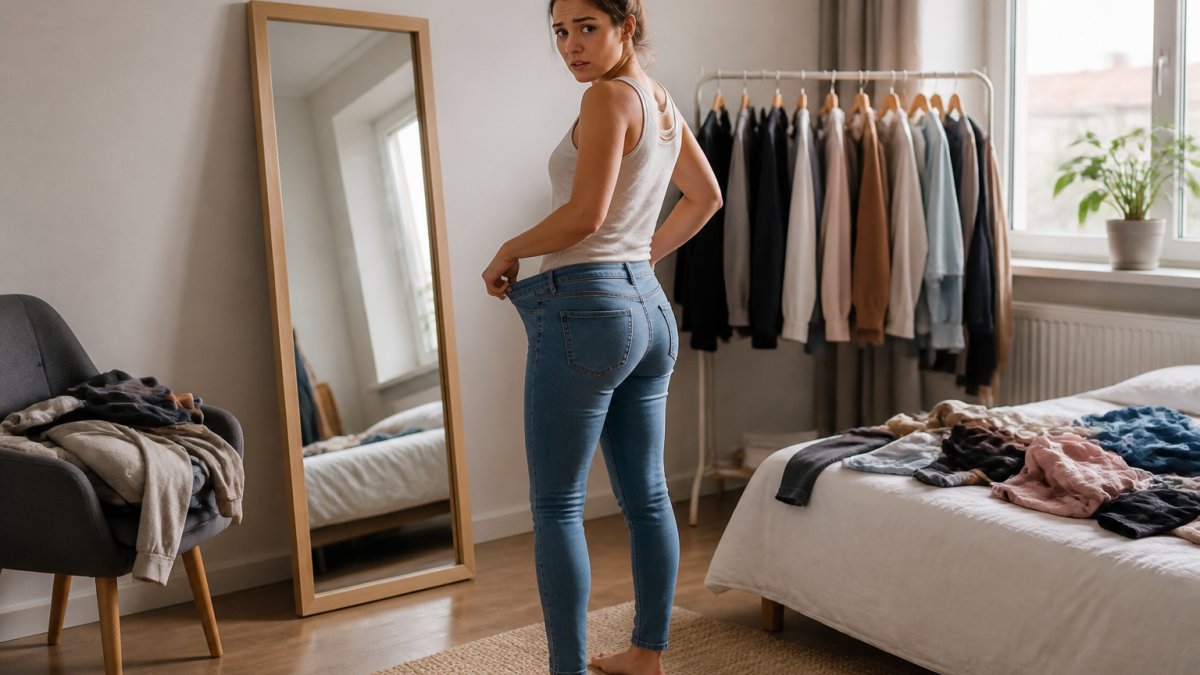
The hip area should have room to move without pulling at the seams: fitted garments should follow your hip curve, looser styles should have clear space. If you can't sit comfortably without the waistband digging in, it's too tight.
Sleeve and Inseam Length
Sleeve length should end at your wrist bone when your arm is at your side, true for most garment types. If sleeves are too long, they bunch at your wrist; if too short, your wrist shows when you raise your arm.
Inseam length determines whether pants hit right on your shoe. The standard is a slight break, a small fold where the pant meets the shoe; no break looks too short, too much looks too long.
Comparing Your Measurements Against Brand Size Charts
Many online shoppers skip size charts or don't trust them.
Start by identifying which measurements the brand actually uses. Not all brands list the same ones: some include shoulder width, others don't; some measure pit-to-pit, others bust.
Next, compare your measurements to the chart.
Read customer reviews for fit feedback.
For solving inconsistent brand sizing issues, compare how different brands measure the same garment type.
When to Size Up, Size Down, or Tailor Your Clothes
Not every fit issue requires tailoring; sometimes a different size is the answer.
Size down when a garment is loose through the body but otherwise fits well.
Tailor when specific areas need adjustment but the overall garment fits well. Sleeve length, inseam, and hem length are easy and affordable to alter; shoulder width and chest are pricier. Learning how to stop returning clothes often means understanding when tailoring is worth the investment versus when you should exchange for a different size.
Finding your perfect fit isn't about memorizing a single size or trusting labels blindly.
Decide whether to size up, size down, or tailor based on where the fit problem occurs and the garment's cost.
| Fit Issue | Best Solution | Why |
|---|---|---|
| Too tight across chest, shoulders, or hips | Size up | These areas are difficult and expensive to alter |
| Loose through body, shoulders fit well | Size down | Excess fabric can be taken in at sides or back |
| Sleeve length, inseam, or hem needs adjustment | Tailor | These alterations are easy and affordable |
| Shoulder width or chest needs adjustment | Tailor | Worth the cost on expensive garments like suits |
| $30 tailoring on $40 garment | Exchange for different size | Cost-benefit doesn't justify tailoring |
| $30 tailoring on $200 garment | Tailor | Investment justified for high-stakes pieces |
Frequently Asked Questions
How do I measure my body accurately for online shopping?
Stand straight in front of a mirror wearing fitted clothes or undergarments. Use a soft measuring tape and keep it parallel to the ground, not pulled too tight. Measure your bust at the fullest point, waist at the narrowest, hips at the widest point, and sleeve length from the center back neck to your wrist. Write down each measurement twice to verify accuracy. For inseam, measure from your inner thigh to your ankle while standing barefoot. These body measurements are essential for comparing against size charts before making a purchase.
Why do clothing sizes vary so much between brands?
Clothing sizes are inconsistent because there's no universal sizing standard across the fashion industry. Different brands use different fit models, production facilities in various countries, and fabric blends that affect sizing. A size 10 at one retailer may fit completely differently at another. According to research in Ergonomics in Design (2025), fit-test protocols vary significantly depending on the product being tested. This inconsistency is why checking brand-specific size charts and reading customer reviews about fit is crucial for online shopping.
What's the difference between size and fit?
Size refers to the label number on a garment, while fit describes how that garment actually drapes and moves on your body. A garment may have the correct size label but still need alterations to fit your unique body shape. Clothing fit depends on your specific body measurements, proportions, and personal comfort preferences. Two people wearing the same size can have completely different fit experiences. This distinction is why taking accurate measurements and trying items on (or using fit technology) matters more than relying on size labels alone.
How can a clothing size calculator help me find my perfect fit?
A clothing size calculator uses your body measurements to recommend the best size across different brands and garment types. By inputting your bust, waist, hips, inseam, and other key measurements, the calculator compares your dimensions against brand-specific size charts to predict which size will fit best. Some calculators account for fabric stretch, garment construction, and your fit preferences (slim, regular, or relaxed). This technology saves time by narrowing down options before you shop, reducing the likelihood of returns due to sizing issues.
What should I check when evaluating how clothes should fit?
Check four main areas: shoulders should align with your shoulder bone, not hang past it; chest and bust should feel comfortable without pulling or bunching; waist should sit at your natural waist without excessive tightness; and sleeves and inseam should end at the correct points on your wrists and ankles. For different garment types, fit standards vary, a dress shirt should have a slight gap when buttoned, while a sweater can be more relaxed. Always assess comfort over appearance; if a garment feels too tight or too loose in any area, it's not the right fit for you.
How do I know if my measurements match a brand's size chart?
Compare each of your body measurements directly against the brand's published size chart. If your bust measurement falls within the range for a size 8, but your waist is closer to a size 10, you're between sizes. In this case, consider the garment type: fitted styles often require a size up, while looser silhouettes may work in your smaller size. Read customer reviews to see if others with similar measurements found the brand runs small or large. If your measurements straddle two sizes, prioritize the fit around your fullest area (usually bust or hips) and tailor if needed.
Should I size up if I'm between two sizes?
Whether to size up depends on the garment type and fabric. For fitted styles like dress shirts, blazers, and dresses, sizing up often provides better comfort and movement. For looser silhouettes like sweaters and casual wear, your smaller size may work fine. Consider the fabric too: stretch materials can work in a smaller size, while rigid fabrics benefit from sizing up. If the garment is slightly too large, tailoring is usually easier and cheaper than dealing with something too tight. Always check the brand's return policy so you can exchange if the fit isn't right.
What role does fabric and garment construction play in fit?
Fabric type significantly affects how a garment fits and feels. Natural fabrics like cotton and linen may shrink slightly after washing, while synthetic blends often hold their shape better. Stretch fabrics (with elastane or spandex) allow more movement and can work in a smaller size than rigid fabrics. Garment construction also matters: seam placement, lining, and reinforcement affect drape and comfort. A well-constructed garment with quality seams will maintain its fit through multiple wears and washes. When shopping online, check fabric composition and construction details to predict how a garment will fit and perform over time.