 ultimate-guide
The Complete Guide to Fit and Sizing for Online Shopping
Last Updated: November 5, 2026
Quick Summary
Fit and sizing for online shopping depends on comparing your own body measurements with a garment's measurement chart, not trusting the size label. Size is a block of measurements each brand assigns, while fit describes comfort, movement and how a garment hangs on your body.
- Measure chest or bust, waist, hips and inseam at home, twice each, in centimetres.
- Compare your measurements against the garment's measurement chart rather than the size label.
- Garment measurements include ease, the extra room built into a cut for movement.
- Fabric stretch changes fit: high-elastane knits feel snugger first and relax with wear.
- Each brand sets its own size block, so the same label can fit differently between brands.
Table of Contents
- Size Versus Fit: Why a Size Label Is Not a Guarantee
- How to Measure Your Body Accurately at Home
- How to Read a Clothing Size Chart Without Guessing
- Fit and Sizing for Pants: Rise, Inseam and Stretch
- Fit and Sizing for Dresses: Silhouette, Ease and Length
- Why Sizing Differs Between Brands and How to Choose Between Sizes
- Booking Your Fit Check With Fit Perfect AI
- Frequently Asked Questions
Size Versus Fit: Why a Size Label Is Not a Guarantee
Most people shopping online assume that a size label tells them how a garment will fit. It usually doesn't. A size is a number that a brand assigns to a block of measurements, and that block differs from one label to the next.
The distinction matters because a size chart is guidance, not a promise. A size is best treated as a starting point you verify against your body rather than a verdict you accept.
Across the sizing research we reviewed, the same idea recurs. A True Style guide to reading size charts explains that fit is judged by comfort, freedom of movement and how the garment hangs, not by the label alone. The Craft Yarn Council standard body measurements states that its fit and length charts are guidelines and that body and sleeve lengths can be changed when appropriate.
How to Measure Your Body Accurately at Home
A repeatable measuring routine is the single biggest upgrade you can make to your sizing accuracy.
What you need: a soft tape measure (not a metal builder's tape), a mirror, a notebook or phone note, and a helper if one is available. Wear light, close-fitting clothing or underwear.
The step-by-step workflow:
- Chest or bust. Wrap the tape around the fullest part of the upper body, under the arms, keeping it level across the back. For bust, measure around the fullest part of the bust. Keep your arms down and breathe normally.
- Waist. Find your natural waist, the narrowing above the navel and below the ribcage. Wrap the tape around this point, level all the way around, and record the number at the end of a normal exhale, not a sucked-in breath.
- Hips. Stand with feet together and measure around the widest part of the seat, usually about 20 cm below the waist. Keep the tape level and parallel to the floor.
- Inseam. Measure from the crotch seam down the inside of the leg to the ankle bone. If you have a helper, this is easier standing; otherwise measure a pair of pants that fit you well and compare.
- Additional measurements as needed. For dresses and tops, add shoulder width (from shoulder point to shoulder point across the back) and sleeve length (from shoulder point to wrist with the arm slightly bent). For pants, add rise (from the crotch seam to the top of the waistband) and thigh circumference.
Record and repeat. Write each measurement in centimetres, since most brand charts publish metric. Take each measurement twice and average the two readings.
Troubleshooting common problems:
- The tape keeps slipping. Pinch the tape at the overlap point with one hand and read the number there rather than trying to hold the whole loop.
- The number changes every time. Mark the reference point on your body with a washable pen or a small sticker so you measure the same spot each time.
- You are measuring alone and the tape tilts at the back. Use a mirror to check that the tape is level, or measure against a wall and step away to read the number.
- Your weight has changed. Re-measure rather than adjusting old numbers by guesswork; a few centimetres in the waist or hips changes which size you should order.
Watch out: measuring over bulky clothing or pulling the tape tight will give you numbers that do not match how the garment will actually sit, so measure over light clothing and keep the tape snug but not compressing.
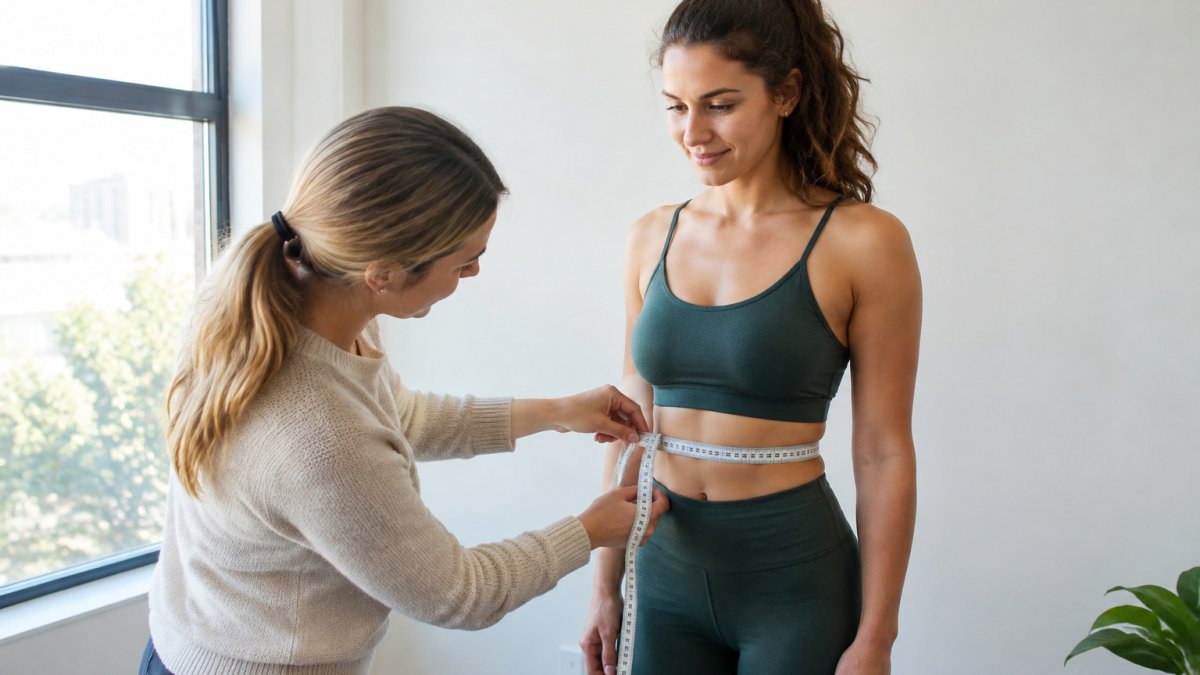
Key Body Measurements: Chest, Bust, Waist, Hips and Inseam
The measurements that drive most apparel fit are chest or bust, waist, hips and inseam. Chest is measured around the fullest part of the upper body; bust is measured around the fullest part of the bust. Waist is taken at the natural narrowing above the navel. Hips are measured around the widest part of the seat.
Keep these measurements in a note on your phone. When you shop, compare them against the garment's measurement chart rather than the size label, since the same letter or number can describe very different cuts. Re-measure every few months or after any significant change in weight or training routine, because a stale set of numbers is almost as unreliable as no numbers at all.
Once you have a consistent measuring routine, the key body measurements are easy to compare against garment charts.
| Measurement | How to take it | Note |
|---|---|---|
| Chest or bust | Around the fullest part of the upper body | Keep the tape level across the back |
| Waist | At the natural narrowing above the navel | Read at the end of a normal exhale |
| Hips | Around the widest part of the seat | About 20 cm below the waist |
| Inseam | From crotch seam to ankle bone | Measure along the inside of the leg |
| Shoulder width | Shoulder point to shoulder point across the back | Add for dresses and tops |
| Sleeve length | Shoulder point to wrist, arm slightly bent | Add for dresses and tops |
| Rise | Crotch seam to top of waistband | Add for pants |
| Thigh circumference | Around the thigh | Add for pants |
How to Read a Clothing Size Chart Without Guessing
A size chart lists garment measurements, not body measurements, and the two are not the same. Garment measurements include ease, the extra room built into a cut so the piece can be worn and moved in. Look for the flat measurement of the garment across the chest, waist and hips, then compare it to your own body measurements plus the ease the brand intends.
When your measurements fall between two sizes, read the product description for fabric and fit notes before choosing. A stretch knit and a rigid woven cut will fit the same measurement very differently. If a chart gives only a size range, check whether the brand publishes garment measurements; a range without them is hard to trust.
Fit and Sizing for Pants: Rise, Inseam and Stretch
Pants are where sizing most often goes wrong, because three measurements interact. Waist controls the fit at the top, rise determines where the waistband sits between navel and hip, and inseam sets the length. A pair can match your waist and still feel wrong if the rise is too short.
Fabric stretch changes the picture further. A pair with high elastane content will feel snugger in the first wear and relax over time, so choose a size that fits comfortably rather than one that feels tight in the fitting room. Rigid denim usually needs a more precise match.
Fit and Sizing for Dresses: Silhouette, Ease and Length
Dresses are judged by silhouette: whether the cut is fitted, relaxed, or structured to skim the body. The key measurements are bust, waist and hips, plus the length from shoulder to hem. Ease matters more here than in tailored pieces, since a fitted dress with too little ease will pull across the bust and gap at the back.
Check the stated length against your height. A midi dress measured on a model of one height may fall at a very different point on your leg, so confirm the length in centimetres before ordering.
Why Sizing Differs Between Brands and How to Choose Between Sizes
Sizing is not standardised across retailers. Each brand builds its own size block around its target customer, which is why the same label can fit differently from one brand to the next.
A practical decision framework for between-size choices. Rather than relying on a single rule, work through four questions in order:
- What is the garment type and intended fit? A fitted blazer, a relaxed knit and a pair of rigid jeans each call for a different answer. Fitted garments usually favour the size that matches your measurements most closely; relaxed garments can tolerate the larger size without looking oversized.
- How much ease does the brand intend? Check the product description or garment measurements for the intended ease. If the chart shows a chest measurement only a few centimetres larger than your body, the cut is close-fitting and the smaller size may pull; if it shows a generous difference, the larger size may hang correctly.
- How much stretch does the fabric have? A high-elastane knit will accommodate a slightly smaller size and relax with wear; a rigid woven or non-stretch denim needs a more precise match and will not forgive a tight fit.
- What is your personal preference for this garment? A relaxed piece may favour the larger size, while a fitted garment may favour the smaller one. Decide before you order, not after you try it on.
Cross-brand and regional variation. Beyond individual brands, sizing conventions differ by region. Sizing conventions can also differ by region, so labels for the same nominal size are not always equivalent across markets.
Testing a between-size purchase. Where the brand offers a return policy, a between-size purchase is a reasonable test; keep the tags attached until you are sure.
Watch out: assuming a size conversion chart from one region to another will be accurate across brands, because regional conventions are loose and a converted label can still be several centimetres off.
Booking Your Fit Check With Fit Perfect AI
If you have read this far, you already know that a sizing decision depends on more than one number. Fit Perfect AI uses full-body photo uploads to recommend sizes for garments, fabrics and styles. Learn more about the company on the About page, check how the [How Accurate Is AI Clothing Sizing: 2026 Guide(https://blog.fitperfectai.com/how-accurate-is-ai-clothing-sizing) explains the method, and see how a digital body measurement app compares with a tape measure. When you are ready, get in touch with the team with questions, or subscribe for a fit check. For current pricing, check Fit Perfect AI's website before you commit.
Frequently Asked Questions
What is the difference between fit and size?
Size is the number or letter printed on a label, usually tied to a chart of body measurements. Fit describes how the garment actually sits on a body: how comfortably it allows movement, how it hangs, and whether seams land where they should. Two garments in the same size can fit differently because of cut, silhouette, fabric stretch and brand grading. Treat the size chart as a starting point and judge fit by comfort and movement, not by the label alone.
Is a 32 waist a size 12 or 14?
There is no universal answer. A 32-inch waist is a body measurement, while size 12 or 14 is a label that depends on the brand's grading. In many charts a 32-inch waist falls near a size 12 or 14, but brands differ. Check the garment's own size chart against your measured waist, and remember that a waist measurement alone does not account for hips, rise or inseam.
How do you measure yourself to find your clothing size?
Use a soft measuring tape and measure over light clothing. Record your chest or bust at its fullest point, your waist at the natural narrowing, and your hips at the widest point. For pants, add inseam from crotch to ankle and note rise if the brand lists it. Compare these numbers with the specific brand's chart, not a generic one, and note whether the chart is body measurement or garment measurement, since the two produce different results.
What should you do if you are between sizes?
Compare your measurements across several points rather than one. If your waist matches one size and your hips another, choose based on the measurement that is hardest to alter, usually the hips or shoulders. Consider the intended fit: a fitted dress needs the smaller size, while a relaxed trouser may suit the larger one. Read reviews that mention whether the brand runs small or large, and check the garment's measurements against a piece you already own and like.