 ultimate-guide
Digital Body Measurement App Benefits: 2026 Guide
Table of Contents
- What Digital Body Measurement Apps Do
- How AI Body Scanning Technology Works
- Key Benefits of Digital Body Measurement Apps
- How to Measure Body Accurately Using Digital Tools
- Digital Sizing for Online Shopping Success
- Data Privacy and Security Concerns
- Accuracy vs. Manual Measurement Techniques
- Frequently Asked Questions
Last Updated: September 30, 2026
What Digital Body Measurement Apps Do
A digital body measurement app uses artificial intelligence and camera technology to analyze your body shape and proportions from photos. The app generates precise sizing recommendations tailored to your unique body type, accounting for variations in how different brands cut and fit their garments.
These tools solve a fundamental problem in online shopping: inconsistent sizing across brands. When you upload full-body photos to a digital body measurement app, the AI analyzes your body composition, proportions, and shape characteristics. Within seconds, you receive personalized size recommendations for specific brands and clothing types. Fit Perfect AI provides recommendations for every garment, fabric, and style, ensuring you select the right size the first time.
The technology eliminates the guesswork that leads to returns. Instead of relying on generic size charts or hoping a review mentions fit, you get data-driven recommendations based on your actual measurements and body type.
How AI Body Scanning Technology Works
AI body scanning uses computer vision and machine learning to interpret the geometry of your body from two-dimensional images. When you upload full-body photos from the front and side, the system identifies key anatomical landmarks and calculates your body dimensions, proportions, and overall shape characteristics.
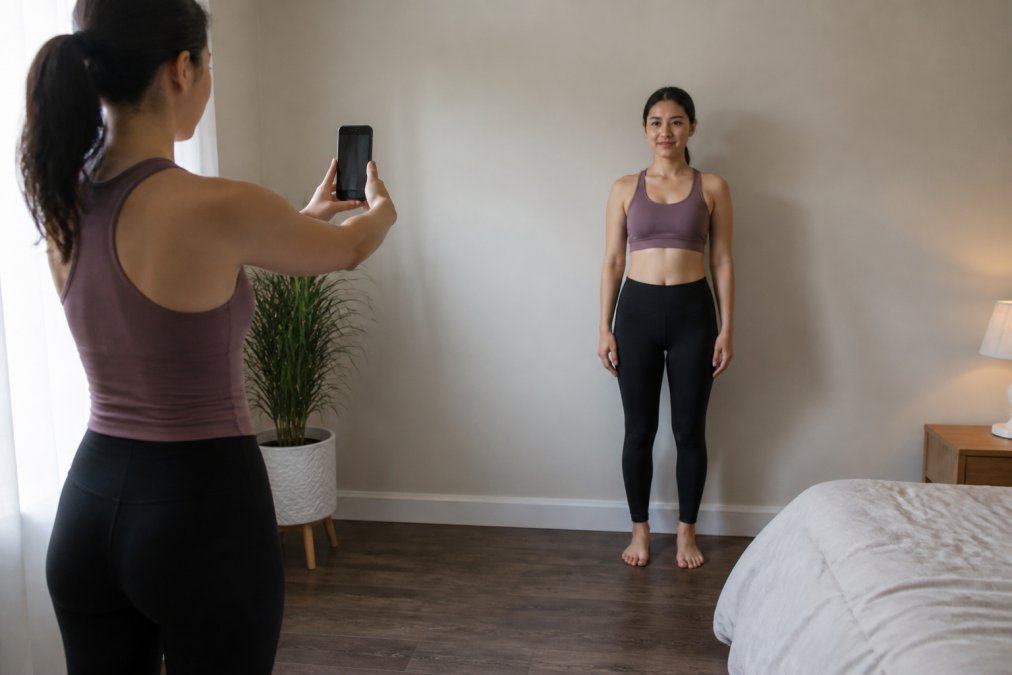
The process involves several technical steps. First, the app's computer vision model detects your body's outline and identifies reference points like shoulders, waist, hips, and inseam. The algorithm then calculates distances between these points to estimate your measurements. Machine learning models trained on thousands of body types and fit outcomes predict which sizes will work best for you across different brands and styles.
This approach differs fundamentally from manual measurement. You're not entering numbers into a form. The AI interprets visual data and cross-references it against an extensive database of how different brands' garments fit different body types. Augmented reality features in some apps let you visualize how clothing might fit before you buy, adding another layer of confidence to your purchasing decision.
The technology accounts for body composition nuances that traditional measurements miss. Two people with the same waist measurement might have very different proportions, muscle distribution, or stubborn fat patterns that affect how clothing drapes. AI body scanning captures these details and adjusts recommendations accordingly.
Key Benefits of Digital Body Measurement Apps
Accurate Sizing Across Multiple Brands
The biggest advantage of using a digital body measurement app is eliminating size inconsistency. Zara runs small. H&M varies wildly between product lines. ASOS uses different standards than Shein. A size 8 in one brand feels completely wrong in another. Manual measurement techniques, comparing your measurements to size charts, fail because size charts themselves are inconsistent and often inaccurate.
AI-powered digital body measurement apps learn how each brand's garments actually fit. Fit Perfect AI's approach of tailoring recommendations by garment, fabric, and style adds another dimension of accuracy, a cotton t-shirt fits differently than a silk blouse, and the app accounts for those differences.
Time Savings and Reduced Returns
Returns cost you time and money. You wait for delivery, realize the fit is wrong, photograph the item, process a return, wait for a refund, then start shopping again. A digital body measurement app eliminates most of that friction. Upload photos once, get accurate recommendations, buy with confidence. The time savings compound when you shop frequently or across multiple brands.
Reduced returns also mean less waste. Clothing that ships to you and back to a warehouse represents environmental impact and shipping emissions. Getting the fit right the first time benefits your wallet and the planet.
Personalized Recommendations by Body Type
Not all bodies fit standard sizing. If you have a curvier figure, you're often caught between sizes. If you're very tall or petite, standard proportions don't apply. If you have broad shoulders or a long torso, standard size charts become nearly useless. Digital body measurement technology recognizes that diversity in body types requires diversity in recommendations.
The AI doesn't force you into generic categories. It analyzes your specific proportions and recommends sizes based on how your actual body shape will interact with how each brand cuts their garments. This is especially valuable for high-stakes purchases, a dress for an important event, professional clothing for a new job, or athletic wear where fit directly affects performance.
How to Measure Body Accurately Using Digital Tools
Calibration and Environmental Factors
Accuracy depends on how you capture your photos. Proper lighting is essential. Natural daylight or consistent artificial lighting produces better results than shadows or flickering overhead lights. Stand against a neutral background without patterns or busy textures that confuse the AI's visual processing.
Camera angle and distance matter significantly. The app needs a clear, unobstructed view of your full body from head to toe. Stand far enough away that the camera captures your entire silhouette without cutting off your head or feet. Most apps recommend holding the camera at chest height, angled slightly downward.
Clothing choice affects measurement accuracy. Wear fitted clothing that shows your actual body shape, not loose garments that hide your proportions. Avoid clothing with patterns or heavy textures. The AI needs to see your body's outline clearly to calculate accurate dimensions. Many apps recommend wearing fitted leggings and a fitted shirt or sports bra.
Environmental calibration helps too.
Consistency and Measurement Accuracy
Measurement accuracy improves with consistency. If you take photos at different times of day, with different lighting, or in different clothing, the results will vary. Your body also changes slightly throughout the day due to water retention, digestion, and posture. For the most reliable recommendations, take your photos under consistent conditions.
Long-term consistency reveals another benefit.
Digital Sizing for Online Shopping Success
Integration with Nutrition and Fitness Tracking
This integration also informs your shopping decisions. As your body changes through fitness progress or lifestyle shifts, your sizing recommendations update automatically. You're not stuck with old size predictions from months ago. The app reflects your current body reality and adjusts brand and size recommendations accordingly.
Real-Time Feedback and Data Visualization
This visual feedback serves multiple purposes. It helps you understand your own body better. It makes fitness progress tangible and motivating. It provides concrete data to support your sizing decisions. When you can see exactly how your measurements compare to a brand's size specifications, choosing the right size becomes a data-driven decision rather than a guess.
Data Privacy and Security Concerns
Body scan photos contain biometric data, information that identifies you as uniquely as a fingerprint. Unlike a credit card number, biometric data cannot be changed if compromised. This makes privacy and security non-negotiable when choosing a digital body measurement app.
Understanding Biometric Data Protection
Biometric data receives stronger legal protection than standard personal information in most jurisdictions. The European Union's GDPR classifies body measurements and photos as "special category data" requiring explicit consent and enhanced safeguards. In the United States, the Biometric Information Privacy Act (BIPA) in Illinois and similar state laws impose strict requirements on how companies collect, store, and use biometric information.
Key Privacy Questions to Ask
Data Retention: Does the app delete your photos after processing, or does it store them indefinitely? Reputable providers typically offer on-device processing (photos never leave your phone) or automatic deletion within 24-48 hours of analysis. Some allow manual deletion at any time. Avoid apps that retain your photos without clear justification or user control.
Red Flags to Avoid
Skip any app that:
- Doesn't clearly explain what happens to your photos
- Requires you to agree to undefined "future uses" of your data
- Stores photos indefinitely without user control
- Shares biometric data with third parties without explicit opt-in consent
- Lacks transparent privacy documentation or makes privacy policies difficult to find
- Has experienced documented data breaches or security incidents
Practical Steps to Protect Your Data
Even with a privacy-conscious app, you can take additional precautions. Use a dedicated email address for the app rather than your primary email. Enable two-factor authentication if the app offers it. Periodically review the app's privacy policy for changes. Delete your account and associated data if you stop using the app. Some apps allow you to request a data deletion report confirming that your information has been removed from their servers.
Accuracy vs. Manual Measurement Techniques
Manual measurement, using a tape measure against your body, seems straightforward but introduces multiple sources of error. The tape can be pulled too tight or too loose. You might measure inconsistently from one session to the next. You can't easily measure your own back or assess your overall proportions. Even if you get accurate measurements, standard size charts often don't match how brands actually cut their garments.
Frequently Asked Questions
Are digital body measurement apps accurate?
Digital body measurement apps use AI and biometric data to deliver precision measurements, but accuracy depends on proper calibration, lighting, and positioning. Most apps achieve results comparable to professional measurements when users follow setup instructions. Measurement accuracy improves over time as the system learns your body metrics and compensates for environmental factors. However, no digital tool is 100% perfect, expect a margin of error similar to manual measurement techniques.
How do I know if a digital body measurement app works for diverse body types?
Look for apps that explicitly address accessibility for different body shapes, sizes, and proportions. Quality digital sizing for online shopping solutions use machine learning trained on varied anthropometric data, not just standard sizes. Before committing, check if the app handles diverse body types.
Is it safe to upload full-body photos to a body measurement app?
Data privacy and security are legitimate concerns. Reputable digital body measurement apps encrypt biometric data, delete images after processing, and do not sell personal information. Before using any app, review their privacy policy carefully, specifically check whether images are stored, how long they're retained, and who has access. Choose providers that are transparent about data handling and comply with relevant data protection regulations. Never use an app that stores your photos indefinitely or shares data with third parties without explicit consent.
How often do I need to update my measurements in a digital body measurement app?
Most digital body measurement apps remember your initial measurements and preferences after the first upload, eliminating the need to re-scan for every purchase. However, if your body composition changes significantly, through fitness progress, weight changes, or muscle development, updating your measurements ensures continued accuracy. Many users re-scan every 3-6 months to maintain precision.