 How-to
How to Measure Chest Size Correctly at Home?
Quick Summary
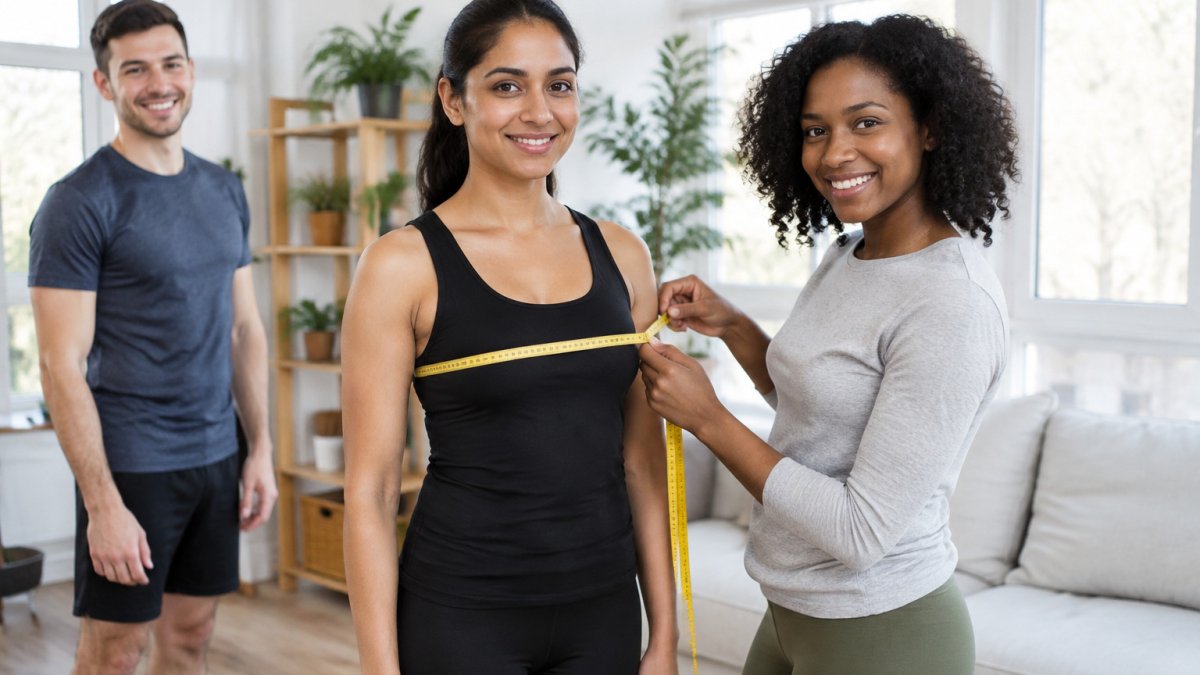
To measure chest size at home, stand up straight with relaxed arms and wrap a soft sewing tape around the fullest part of your chest, usually at nipple level, keeping it level across your back. Breathe normally, read the number in centimetres, and repeat twice more.
- Use a soft, flexible sewing tape, not a metal tape or stiff ruler.
- Measure at the fullest part of the chest, which is usually at nipple level.
- Keep the tape snug and level, checking in a mirror.
- Breathe out naturally and avoid holding your breath in or sucking in your stomach.
- Measure two or three times and use the most common number.
Table of Contents
- What You Need to Measure Chest Size
- Step-by-Step: How to Measure Your Chest Size Male in cm
- How to Measure Your Chest Size Female: Bra and Upper-Bust Placement
- Chest Measurement for Clothing Size: Matching Your Number to a Size Chart
- Measuring Over Clothes, Breathing, and Other Accuracy Factors
- Common Chest Measuring Mistakes and How to Fix Them
- How to Know Your Chest Size Without a Measuring Tape
- Booking Your Next Fit: Let Fit Perfect AI Check Your Size
- Frequently Asked Questions
What You Need to Measure Chest Size
Learning how to measure chest size at home takes about five minutes and only a few basic items. Most people already own everything required.
The main tool is a soft, flexible measuring tape, the kind used for sewing. A metal tape or a stiff ruler will not wrap around the body properly. Keep a pen and paper nearby to record your number right away.
You will also want a mirror, which helps you check that the tape sits level. Stand in fitted or light clothing, or better yet, against bare skin. Clothing adds thickness and can throw off your reading.
Here is a quick checklist:
- A soft sewing tape measure (cm or inches)
- A pen and paper
- A mirror, if possible
- Light clothing or bare skin
- Someone to help, which makes measuring easier but is optional
A sewing tape is a reliable choice for this task. It stays flat and bends easily around the body.
Step-by-Step: How to Measure Your Chest Size Male in cm
Many men get the wrong number because the tape sits too high or too low, or because they measure once and trust it. Follow these steps for a reliable result, whether you are measuring yourself or having someone help. For a fuller guide to taking body measurements accurately at home, see how to measure body accurately at home.
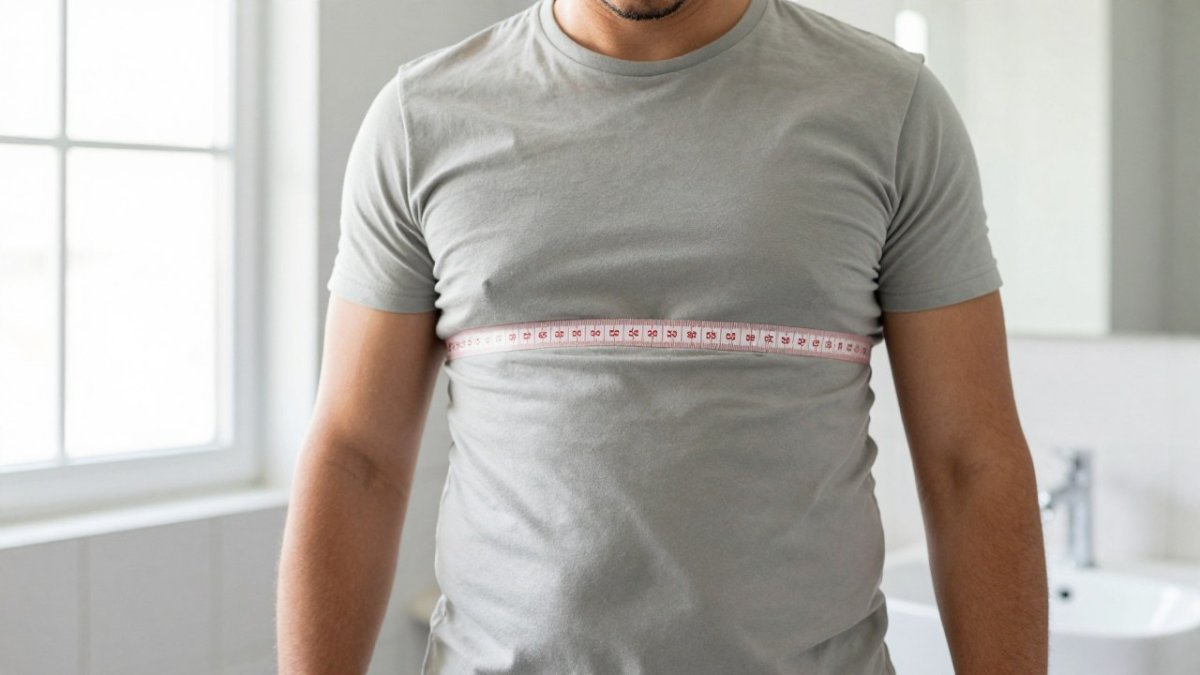
- Stand up straight. Keep your feet about shoulder-width apart and your arms relaxed at your sides. Do not puff out your chest or pull your shoulders back, stand the way you normally stand.
- Decide which chest point matches your purpose. This is where most guides disagree. For general clothing size charts and most shirt sizing, measure at the fullest part of the chest, which is usually at nipple level. For suit jackets and some tailored shirts, the guide may ask for the widest point just below the armpits. For tactical or uniform sizing, the instruction is often to measure just below the armpits as well. Read the brand's chart first, then pick the point it names. If no point is named, use the fullest part of the chest.
- Wrap the tape around your back. Pass it under the armpits and across the shoulder blades. Keep the tape flat against the skin, a twisted tape reads long.
- Keep the tape level. Check in a mirror that it runs straight across the front and back. A tape that slopes down at the back adds length to the reading.
- Settle your breath, then read. Let your breath return to normal and read the number at the natural end of an exhale. Do not hold a deep breath in or suck in your stomach. If a pattern or garment guide explicitly says to measure with an inhaled breath, follow that guide for that garment, but for body measurement, use a relaxed exhale.
- Write it down in centimetres. Record the number, the date, and whether you measured over bare skin or light clothing. Repeat the measurement two more times and use the most common number.
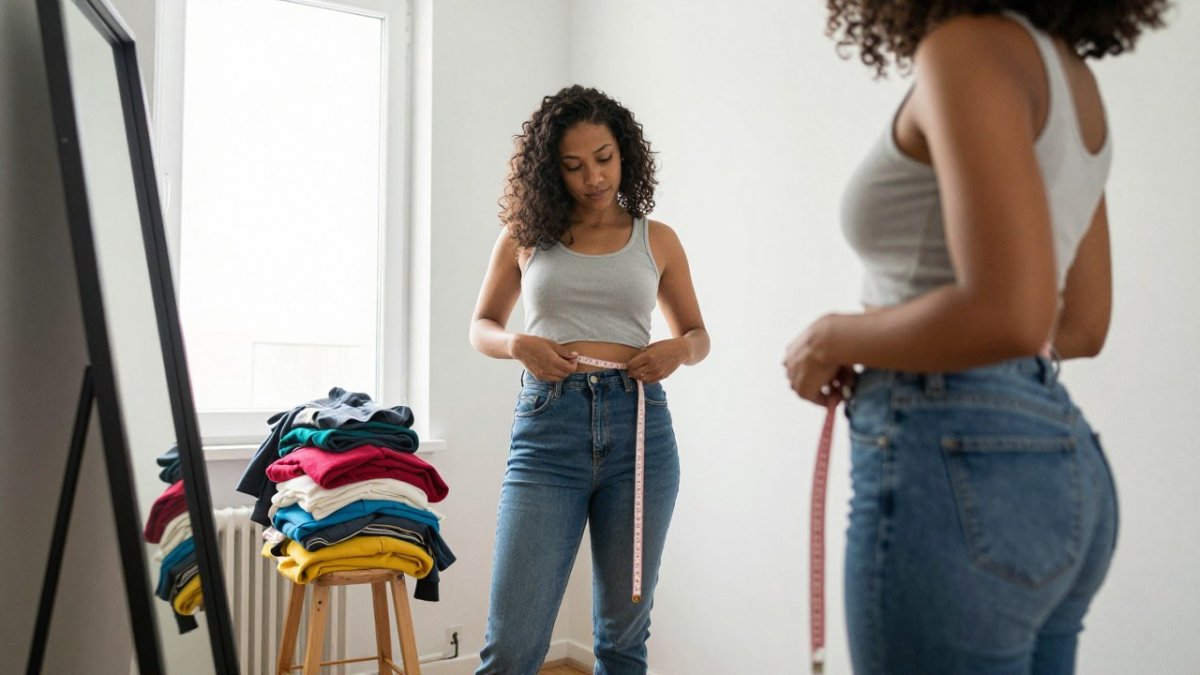
Measuring yourself without help: Stand in front of a mirror with your back to it, or use a second mirror. Hold the tape end against the front of your chest with one hand, wrap it around your back with the other, and bring it back to the front. Look in the mirror to confirm the tape is level before you read the number. A common pattern is for the tape to ride up at the back when you reach around, check the mirror and pull it down before reading.
Watch out: Pulling the tape tight is the most common error. It should be snug, not squeezing. If the tape leaves a deep mark on your skin, it is too tight.
!A man in a fitted shirt standing upright in a bright home bathroom, arms relaxed at his sides, with a soft flexible tape measure wrapped level around the fullest part of his chest. They are of mixed backgrounds.
How to Measure Your Chest Size Female: Bra and Upper-Bust Placement
For women, the measurement point depends on what you are measuring for. Three readings matter, and they are not interchangeable.
Upper bust: Place the tape under the armpits and over the top of the bust tissue, above the fullest point. Keep it level all the way around. Breathe normally and avoid lifting your shoulders. This figure is useful for fitted tops, dresses, and some sewing patterns, because it reflects the frame above the bust. Because the upper-bust measurement complements the fullest-bust figure when choosing a fit, Chic Boutique xx's guide can help connect these measurements with the rest of your clothing size.
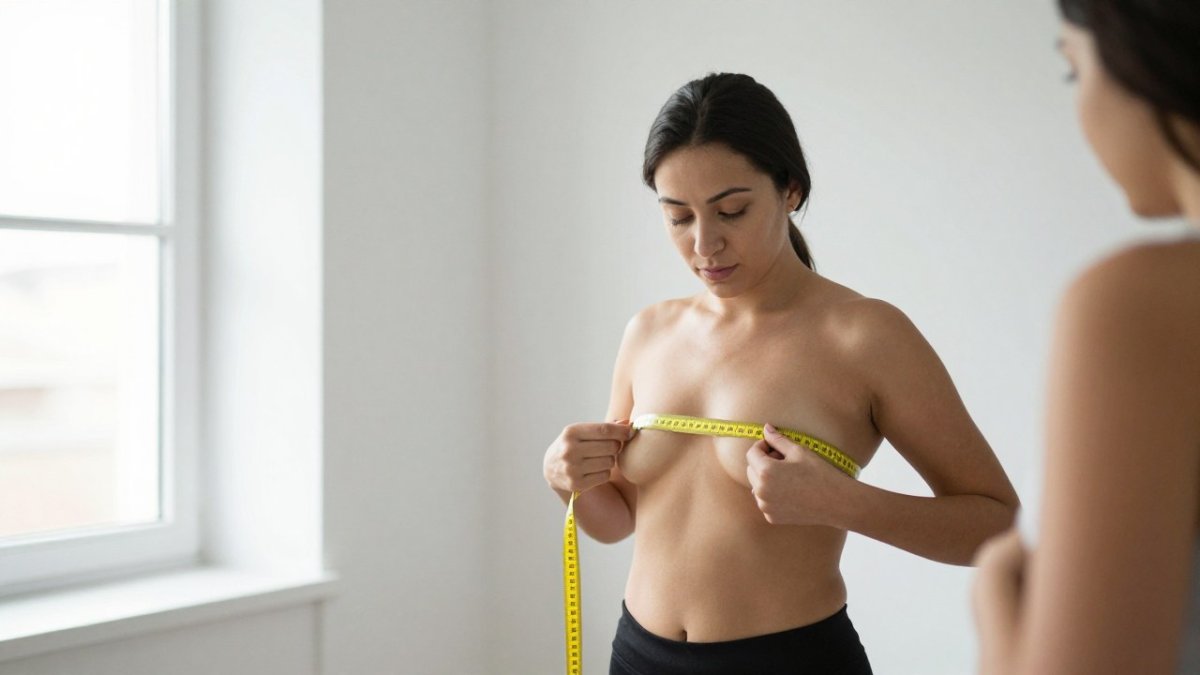
Full bust: Wrap the tape around the fullest part of the bust, usually at nipple level, keeping it level across the back. This is the number most clothing size charts mean when they list "bust." Measure over a well-fitting, unpadded bra for the most consistent result.
Under-bust band: For bra sizing, measure directly under the bust, snug against the ribcage. This gives the band size. The difference between the band and the full bust determines the cup size on most sizing systems. Follow the bra brand's own chart, because cup conventions vary between manufacturers.
Body shape matters. If you have a fuller bust, the fullest point may sit lower than nipple level; if you have a smaller bust, the upper-bust and full-bust readings may be close together. A common pattern is for the tape to slip down at the back when measuring the full bust, check in a mirror that the tape is level before reading.
Watch out: Measuring over a padded or push-up bra inflates the full-bust reading. Use a lightly lined or unpadded bra, or measure against bare skin if the size chart says to.
Use the number that matches the garment you are shopping for: upper bust for fitted tops and dresses, full bust for general clothing charts, and under-bust band for bras. For sizing designed around fuller figures, see accurate sizing for curvy figures.
Chest Measurement for Clothing Size: Matching Your Number to a Size Chart
Your chest number only helps if you compare it to the right chart. Sizing differs widely between brands, so a "medium" at one store may not match another.
Find the brand's size chart and look for a chest or bust column in centimetres or inches. If generic charts keep giving you the wrong size, read why online size charts fail. Match your number to the closest range. If you fall between two sizes, check the brand's fit notes or read reviews from shoppers with a similar build.
Some people struggle with the conversion between units. Remember that 2.54 cm equals one inch. Stick to one unit when comparing charts to avoid mistakes.
Measuring Over Clothes, Breathing, and Other Accuracy Factors
Several small details change your result. Being aware of them improves accuracy.
- Clothing: Measure over light clothing or bare skin, not a thick jumper.
- Breathing: Let your breath settle naturally. Holding your breath in or sucking in your stomach adds error.
- Posture: Slouching shortens the reading, so stand tall.
- Tape tension: The tape should be snug without digging in.
- Repeat the test: Measure two or three times and use the most common number.
Measuring at the same time of day each time helps keep results consistent. Body size can shift slightly after meals or exercise.
Common Chest Measuring Mistakes and How to Fix Them
Most errors are easy to correct once you know them.
| Mistake | Effect on Result | Fix |
|---|---|---|
| Tape too tight | Reading comes out too small | Keep it snug, not squeezing |
| Tape sits too high | Measures the wrong area | Move it to the fullest point |
| Tape slants | Number runs too large | Check level in a mirror |
| Holding breath | Number can read too large | Breathe out naturally first |
| Wearing a thick top | Number reads too large | Measure in light clothing |
A common mistake is measuring once and trusting that single number. Repeat the process to catch any slips.
How to Know Your Chest Size Without a Measuring Tape
No tape? You can still estimate your size. Lay a fitted t-shirt you like flat on a table. Measure straight across the chest from one armpit seam to the other. Double that number to estimate the full chest circumference.
This method is less precise than wrapping a tape around your body. Treat the result as a rough guide and check it against a size chart before buying.
Booking Your Next Fit: Let Fit Perfect AI Check Your Size
Measuring by hand works, but it takes time and is easy to get wrong. You can subscribe to Fit Perfect AI's plans to see the options available. If you want a faster answer, Fit Perfect AI uses full-body photo uploads to provide sizing recommendations.
Ready to try it? Register with Fit Perfect AI to get started, and find the right fit for your next order.
Frequently Asked Questions
How can I measure my chest size at home?
Use a soft, flexible tape measure and stand upright with your arms relaxed at your sides. Wrap the tape around the fullest part of your chest, passing under the armpits and across the shoulder blades, keeping it level all the way around. Breathe normally, exhale gently, and read the measurement where the tape meets its starting end. Note the result in inches or centimetres, then repeat the measurement once more to confirm it matches before comparing it to a size chart.
Should I measure my chest over or under clothing?
Measure over light clothing or bare skin, never over a bulky layer. Thick sweaters, padded bras or heavy jackets add bulk that inflates the number and can push you into a size that fits badly. If you must wear something, choose a thin layer such as a fitted t-shirt. Keep the tape snug rather than tight so it sits flat against the body without compressing the chest, which would otherwise shrink the reading.
How do I measure chest size in inches or centimeters?
Take the measurement with a flexible tape marked in both units, so you can record whichever your size chart uses. Inches are common for clothing charts in the US, while centimetres are standard in most other markets. If your tape shows only one unit, convert using 1 inch equals 2.54 cm. Always write down the unit next to the number so you do not mix them up when you compare against a size chart.
How do I measure chest size accurately with a tape measure?
Accuracy depends on three things: tape position, tension and posture. Keep the tape horizontal across the back and front, check it sits at the same level all the way around, and avoid pulling it tight. Stand tall with your arms at your sides rather than hunched or flexed. Measure twice, and if the two readings differ by more than a centimetre or so, measure a third time and use the most consistent result.